

Description
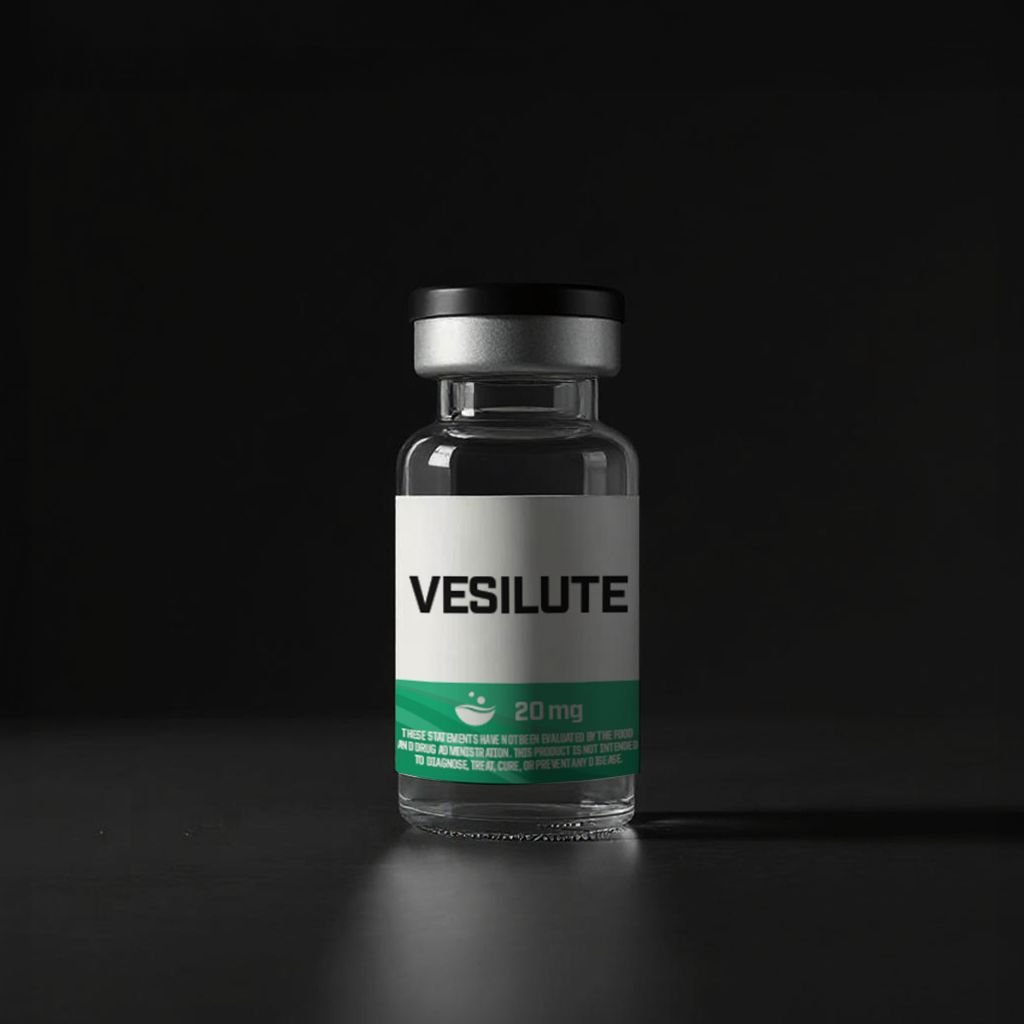
VESILUTE Research Peptide
What Is Vesilute?
VESILUTE Research Peptide, also known as Vesilut, is identified as the synthetic dipeptide L-glutamyl-L-aspartic acid, represented by the sequence Glu-Asp or ED. It belongs to the ultrashort peptide-bioregulator class associated with Russian gerontology research and is primarily investigated in models involving gene regulation, cellular ageing and urogenital tissue biology. Chemical databases classify L-glutamyl-L-aspartic acid as a dipeptide formed when L-glutamic acid and L-aspartic acid are joined through a conventional peptide linkage.
Vesilute should not be confused with gamma-L-glutamyl-L-aspartate, an isomer in which the peptide bond involves glutamic acid’s side-chain carboxyl group. The linkage position changes the molecule’s structure and may alter its biological behaviour. Researchers can examine Vesilute through Soma Chems Lab alongside compounds in the broader research peptide collection.
Proposed Gene-Regulation Mechanism
No specific Vesilute receptor, enzyme target or conventional signalling pathway has been conclusively identified. Its proposed mechanism comes from broader research on short peptide bioregulators, which suggests that some dipeptides and tripeptides can enter cells, reach the nucleus and interact with DNA or chromatin-associated structures.
Experiments using fluorescently labelled short peptides demonstrated cellular and nuclear penetration in cultured HeLa cells. The same research reported sequence-dependent interactions between selected peptides and DNA oligonucleotides, supporting a possible transcriptional mechanism rather than receptor-mediated signalling. However, cellular entry demonstrated for related short peptides cannot automatically establish identical transport or nuclear accumulation for every Vesilute preparation.
Published peptide–DNA modelling assigned the ED sequence a possible interaction with the ATTT nucleotide motif. Such binding could theoretically modify DNA accessibility to transcription factors, proteins that determine whether specific genes are transcribed into messenger RNA. This remains a proposed epigenetic interaction: it does not identify a Vesilute-regulated gene, prove direct DNA binding inside urogenital cells or demonstrate a reproducible downstream protein response.
Evidence and Research Limitations
Direct peer-reviewed evidence specifically indexed under Vesilute or Vesilut is extremely limited. Much of its claimed urogenital research context is extrapolated from tissue-derived peptide preparations, related Khavinson peptides or general experiments investigating short-peptide effects on chromatin and gene expression.
Cellular studies provide a plausible framework for nuclear entry and DNA interaction, but validated Vesilute-specific assays involving bladder epithelial cells, detrusor smooth-muscle cells or prostate-derived cultures remain scarce. Robust animal pharmacology, receptor-binding data, pharmacokinetic characterization and independently replicated human trials have not been established. Consequently, claims regarding bladder function, prostate biology, inflammation or tissue restoration should be treated as research hypotheses rather than demonstrated human outcomes.
Comparison With Related Peptides
Thymosin Alpha-1 Research Peptide is a 28-amino-acid, N-terminally acetylated immunoregulatory peptide studied in dendritic cells, T lymphocytes and Toll-like-receptor-dependent pathways. Unlike Vesilute’s proposed DNA-interaction model, thymosin alpha-1 has a substantially larger structure and a broader experimental and human evidence base involving immune signalling.
Selank Research Peptide is a seven-amino-acid tuftsin analogue with the sequence Thr-Lys-Pro-Arg-Pro-Gly-Pro. Selank research focuses on GABAergic neurotransmission, stress-related behaviour and changes in neural gene expression, making it mechanistically distinct from Vesilute’s proposed urogenital and chromatin-regulation context.
Frequently Asked Questions
Is Vesilute the same as Vesugen?
No. Vesilute is the Glu-Asp dipeptide, whereas Vesugen is the Lys-Glu-Asp tripeptide.
Does Vesilute have a confirmed receptor?
No specific receptor or directly regulated enzyme has been validated.
Is Vesilute supported by human clinical trials?
Strong, independently replicated human clinical evidence has not been established.
For laboratory research use only.
Additional information
VESILUTE Research Peptide
$64.99
VESILUTE research peptide developed for laboratory and analytical research applications.
• High purity peptide compound
• Third-party lab tested
• Research use only
Reviews
Clear filtersThere are no reviews yet.