

Description
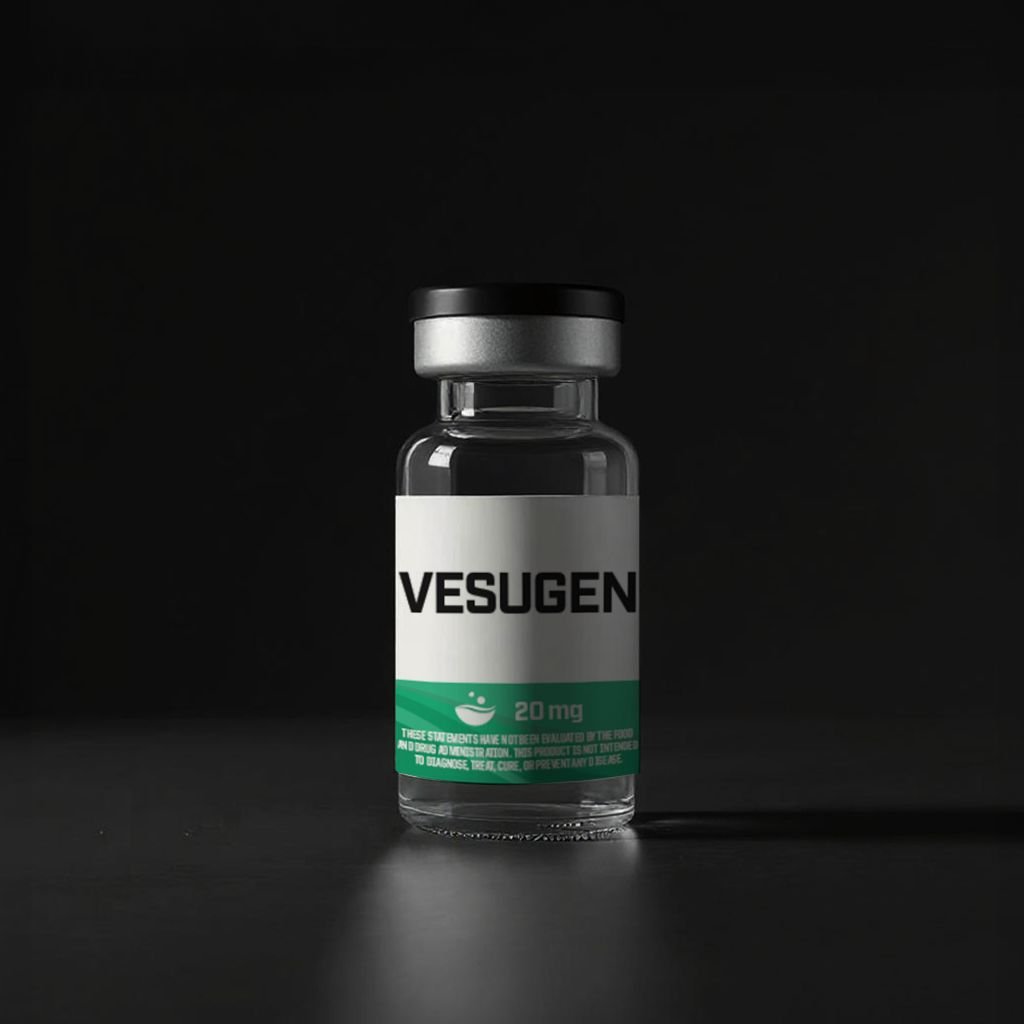
VESUGEN Research Peptide
What Is Vesugen?
VESUGEN Research Peptide is a synthetic ultrashort tripeptide composed of L-lysine, L-glutamic acid and L-aspartic acid, represented by the sequence Lys-Glu-Asp or KED. Alternative names include KED peptide and Vezugen. It belongs to the short peptide bioregulator class developed from research on peptide complexes isolated from vascular tissue and is primarily investigated in endothelial-cell biology, vascular ageing and gene-expression regulation. Vesugen has no conclusively identified cell-surface receptor or directly inhibited enzyme.
Vesugen is available for laboratory investigation through Soma Chems Lab within its broader research peptide collection.
Endothelial and Gene-Regulation Pathways
Vascular endothelial cells form the inner lining of blood vessels and regulate vascular tone, barrier permeability, coagulation and communication between circulating blood and surrounding tissues. Vesugen research focuses on whether the KED sequence can modify endothelial gene expression rather than activate a conventional receptor pathway.
In aged vascular-cell cultures, Vesugen increased expression of Ki-67, a nuclear protein associated with active phases of the cell cycle. Molecular-docking experiments proposed that KED may interact with the promoter region of MKI67, the gene encoding Ki-67. This supports an epigenetic hypothesis in which a short peptide influences transcription, but docking does not prove direct DNA binding inside living organisms or establish the complete molecular mechanism.
Human endothelial cultures derived from normal, atherosclerotic and restenotic vascular tissue have also been examined. KED increased connexin-37 expression in altered cultures; connexin-37 forms gap-junction channels that permit ions and signalling molecules to pass between neighbouring endothelial cells. The peptide also increased SIRT1, an NAD-dependent deacetylase involved in chromatin regulation, cellular stress responses and DNA-repair processes.
The same experiments reported normalization of elevated endothelin-1 expression. Endothelin-1 is an endothelial signalling peptide that strongly constricts blood vessels and participates in vascular-tone regulation. These findings were produced in cultured cells and do not establish comparable vascular effects in humans.
KED has additionally reduced expression of p16 and p21 in long-term cultures of human oral mesenchymal stem cells. Both proteins inhibit cyclin-dependent kinases and help enforce cellular senescence, making them useful experimental markers of ageing-related cell-cycle arrest. This evidence remains cellular and is not specific proof of vascular activity.
Comparison With Related Compounds
ARA-290 Research Peptide is an erythropoietin-derived peptide, also called cibinetide, that targets the EPOR–CD131 innate repair receptor associated with tissue-protective and inflammatory signalling. Unlike Vesugen’s proposed transcriptional effects, ARA-290 has a defined receptor hypothesis and has progressed into registered human studies.
The BPC-157 and TB-500 Wolverine Stack combines two structurally unrelated research peptides. BPC-157 is studied mainly in preclinical repair models, while TB-500 contains a thymosin-β4-derived actin-binding sequence associated with cell migration. Neither compound shares Vesugen’s KED structure or vascular promoter-interaction hypothesis.
Current Evidence and Limitations
Most Vesugen evidence comes from cell cultures, molecular modelling and studies produced by a limited group of investigators. Small human reports have described vascular or ageing-related observations, but their limited sample sizes, incomplete methodological reporting and lack of broad independent replication prevent firm conclusions. Validated pharmacokinetic data, a confirmed molecular receptor and large placebo-controlled trials remain unavailable.
Frequently Asked Questions
Is Vesugen the same as KED peptide?
Yes. Vesugen refers to the Lys-Glu-Asp tripeptide commonly abbreviated KED.
Does Vesugen directly activate VEGF receptors?
No direct VEGF-receptor activation has been established; published work mainly reports changes in endothelial proteins and gene-expression markers.
Is Vesugen supported by strong clinical evidence?
No. The evidence is predominantly cellular and exploratory, with only limited human reports.
Additional information
VESUGEN Research Peptide
$64.99
Synthetic KED tripeptide researched for endothelial biology, vascular ageing and gene-expression pathways.
Reviews
Clear filtersThere are no reviews yet.