


Description
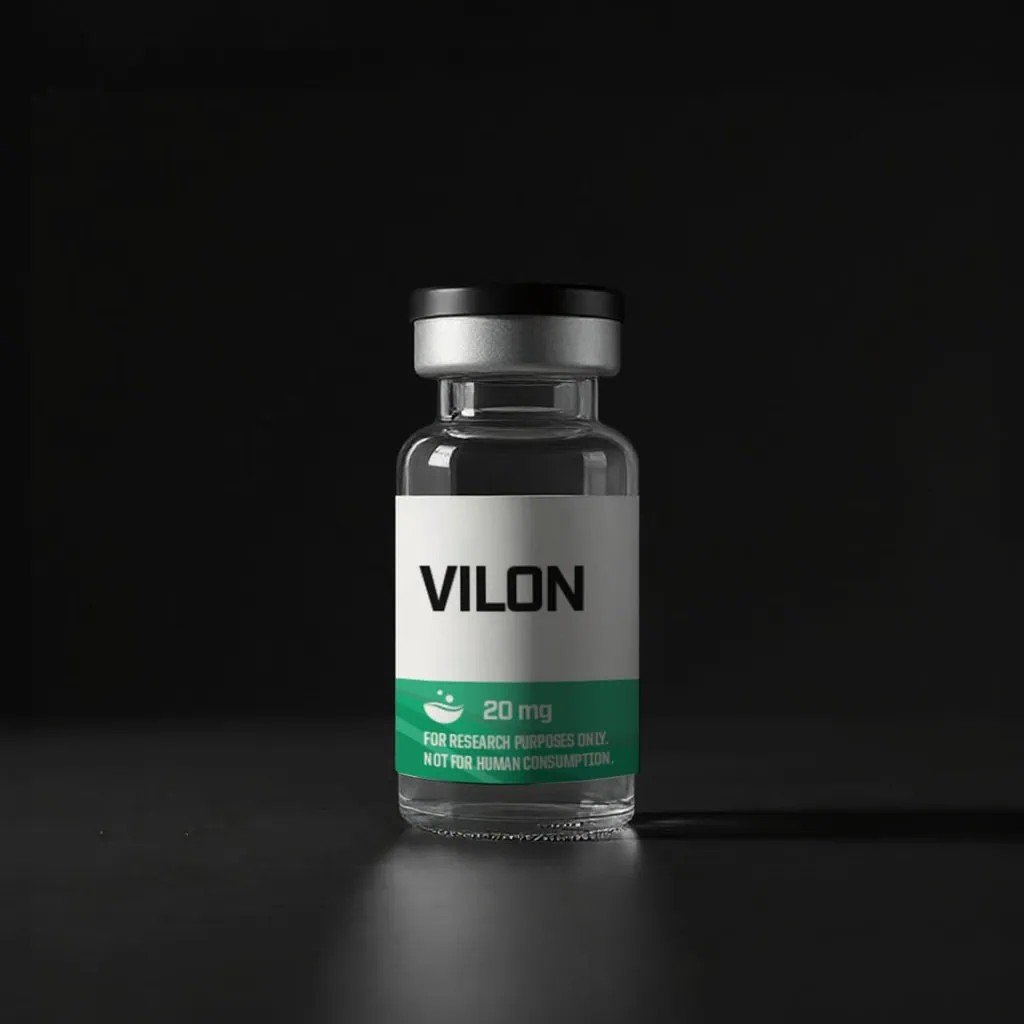
VILON Research Peptide
What Is Vilon?
VILON Research Peptide refers to Vilon, a synthetic dipeptide composed of L-lysine and L-glutamic acid in the sequence Lys-Glu, abbreviated KE. It is also known as L-lysyl-L-glutamic acid, lysylglutamate and the KE peptide. Vilon was developed during research into short thymus-associated peptide bioregulators and is studied primarily in immune-cell differentiation, gene-expression regulation and experimental ageing models. It is chemically distinct from complex thymic extracts because it contains only two defined amino-acid residues.
Vilon can be examined alongside other chemically defined compounds available from Soma Chems Lab and within the broader research peptide collection.
Immune and Gene-Regulation Pathways
No specific Vilon receptor, binding protein or directly inhibited enzyme has been conclusively established. Published experiments instead associate the peptide with changes in immune-cell markers and transcriptional activity.
In cultured mouse spleen lymphocytes, Lys-Glu increased expression of the interleukin-2 gene and stimulated IL-2 messenger-RNA synthesis. IL-2 is a cytokine produced mainly by activated T cells and normally supports T-cell proliferation, survival and differentiation through IL-2 receptor signalling involving JAK1, JAK3 and STAT5. These experiments suggest that Vilon may act upstream of cytokine production, but they do not demonstrate that it binds the IL-2 receptor or directly activates the JAK–STAT pathway.
Studies using cultured human and rat thymic cells reported changes in CD5 expression and differentiation markers associated with CD4-positive T-helper cells. CD5 helps regulate the activation threshold of developing T lymphocytes, while CD4 identifies immune cells that coordinate cytokine-dependent responses. These observations support research into thymocyte maturation, although the molecular event connecting Lys-Glu exposure to marker expression remains unresolved.
Vilon has also been examined in ageing human lymphocyte cultures, where researchers reported decondensation of facultative heterochromatin. Facultative heterochromatin contains genomic regions that can alternate between transcriptionally inactive and active states, so changes in its compaction may influence gene accessibility. Separate mesenchymal stem-cell experiments reported changes in SIRT1, PARP1 and PARP2 expression; SIRT1 regulates protein acetylation and metabolic stress responses, while PARP1 and PARP2 participate in DNA-damage signalling and repair. These findings remain laboratory observations rather than proof of a unified gene-regulatory mechanism.
Evidence and Research Limitations
Cellular studies provide preliminary evidence involving IL-2 transcription, thymocyte markers and chromatin organisation. Animal research has examined Vilon in mouse lifespan, spontaneous-tumour and radiation-associated immune models, as well as rat models involving transforming growth factor-beta and vascular permeability. Such findings cannot establish comparable effects in humans.
A Russian randomized study in people with type 1 diabetes reported changes in coagulation and fibrinolysis measurements after Vilon exposure. However, limited methodological reporting, condition-specific endpoints and a lack of broad independent replication prevent general conclusions about human biological activity. Much of the Vilon literature also originates from a relatively small network of researchers, and formulation-specific pharmacokinetic data remain sparse.
Comparison With Related Compounds
5-Amino-1MQ Research Peptide is not a peptide but a quinolinium-derived small molecule that inhibits nicotinamide N-methyltransferase. NNMT transfers a methyl group from S-adenosylmethionine to nicotinamide, linking its activity to methyl-donor balance and NAD-related metabolism; this enzymatic mechanism differs from Vilon’s proposed transcriptional and thymic-cell effects.
AOD-9604 Research Peptide is a 16-amino-acid fragment derived from the C-terminal region of human growth hormone and is studied mainly in lipid-metabolism models. Vilon is a two-residue thymic bioregulator without a confirmed metabolic receptor, making the compounds structurally and mechanistically distinct.
Frequently Asked Questions
Is Vilon the same as Thymalin?
No. Vilon is the defined Lys-Glu dipeptide, whereas Thymalin is a mixture of peptides obtained from thymic tissue.
Does Vilon have a confirmed receptor?
No specific high-affinity receptor has been established; reported effects involve gene expression, chromatin organisation and immune-cell markers.
Is Vilon supported by strong human clinical evidence?
No. Most evidence is cellular or animal-based, while the available human research is limited and insufficient for broad conclusions.
Additional information
VILON Research Peptide
$49.99
Synthetic Lys-Glu dipeptide researched for immune regulation and gene-expression pathways.
Reviews
Clear filtersThere are no reviews yet.