

Description
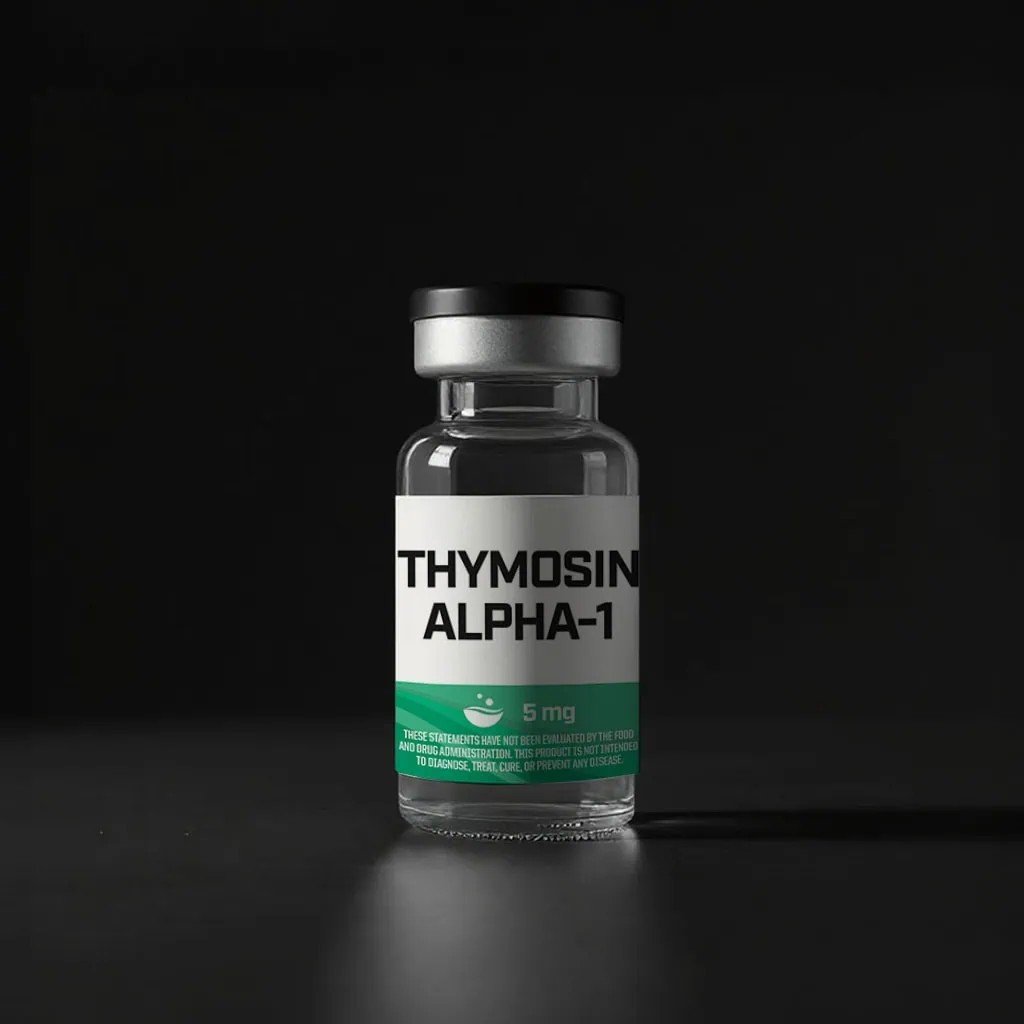
THYMOSIN ALPHA-1 Research Peptide
What Is Thymosin Alpha-1?
THYMOSIN ALPHA-1 Research Peptide is a synthetic form of thymosin alpha-1, a 28-amino-acid, N-terminally acetylated polypeptide also known as Tα1, TA1 or thymalfasin. The peptide was originally isolated from bovine thymosin fraction 5 and was later identified as the N-terminal sequence of the larger intracellular protein prothymosin alpha. Its main research context is immunoregulation, particularly dendritic-cell function, T-lymphocyte responses, innate immune sensing and cytokine signalling.
Thymosin alpha-1 can be investigated through Soma Chems Lab alongside other compounds in the research peptide collection.
Immune-Signalling Mechanisms
No single high-affinity thymosin alpha-1 receptor has been conclusively established. Experimental studies instead show pathway dependence involving Toll-like receptors, especially TLR9 and, in some models, TLR2. Toll-like receptors detect microbial or damage-associated molecular patterns and recruit adaptor proteins that initiate transcriptional immune responses.
In murine dendritic cells, thymosin alpha-1 activated a TLR9–MyD88–IRF7 pathway. MyD88 transfers signals from endosomal TLR9, while IRF7 promotes transcription of type I interferons involved in antiviral defence. Related infection models reported increased dendritic-cell maturation and interleukin-12 production through p38 MAPK and NF-κB signalling. IL-12 supports natural-killer-cell activity and favours T-helper-1 differentiation, whereas NF-κB regulates numerous inflammatory and immune-response genes.
Cellular studies using human monocyte-derived dendritic cells found that thymosin alpha-1 modified responses to microbial and viral stimuli rather than producing one uniform stimulatory effect. Reported changes in antigen-presentation markers, cytokines and T-cell-directed signalling indicate context-dependent immunomodulation, but these experiments do not prove direct physical binding between the peptide and a Toll-like receptor.
Evidence From Animal and Human Research
Animal studies have examined thymosin alpha-1 in fungal and viral infection models, immune suppression and inflammatory injury. These experiments support effects on dendritic cells, natural killer cells and T-cell-associated pathways, but they cannot establish equivalent outcomes in humans.
Human research is more extensive than for many experimental peptides, although results vary by condition, trial design and combination therapy. Thymalfasin has been studied in chronic viral hepatitis, oncology, vaccine-response research and sepsis. A large multicentre, double-blind phase III trial published in 2025 enrolled 1,106 adults with sepsis and found no clear reduction in 28-day all-cause mortality compared with placebo. Earlier hepatitis trials produced mixed findings, preventing broad conclusions across diseases.
Comparison With Related Peptides
FOXO4-DRI/Proxofim Research Peptide is a D-retro-inverso senolytic peptide designed to disrupt the FOXO4–p53 protein interaction in senescent cells. Its preclinical objective is selective apoptosis of apoptosis-resistant senescent cells, which is mechanistically distinct from thymosin alpha-1 research involving dendritic cells and immune signalling.
GHRP-6 Research Peptide is a synthetic hexapeptide with affinity for the ghrelin receptor, GHS-R1a. Activation of this G-protein-coupled receptor stimulates pituitary growth-hormone release through phosphatidylinositol, protein kinase C and intracellular calcium signalling. Thymosin alpha-1 does not share this receptor target or growth-hormone-secretagogue mechanism.
Current Evidence and Limitations
The literature does not establish one universal molecular target that explains every reported thymosin alpha-1 effect. Study populations, co-treatments and endpoints differ considerably, and positive cellular or animal findings have not consistently translated into clinical benefit. Evidence for a specific research formulation cannot be inferred solely from studies using regulated thymalfasin products.
Frequently Asked Questions
Is thymosin alpha-1 the same as thymalfasin?
Yes. Thymalfasin is the generic name commonly used for synthetic thymosin alpha-1.
Is thymosin alpha-1 the same as thymosin beta-4?
No. Thymosin alpha-1 is a 28-residue immunoregulatory peptide, whereas thymosin beta-4 is an actin-binding peptide with different cellular functions.
Does thymosin alpha-1 have a confirmed receptor?
No single receptor has been conclusively validated; Toll-like-receptor-dependent pathways are supported experimentally without definitive proof of one direct binding target.
Additional information
THYMOSIN ALPHA-1 Research Peptide
$49.99
Synthetic thymalfasin peptide researched for immune signalling and T-cell biology.
Reviews
Clear filtersThere are no reviews yet.