
Description
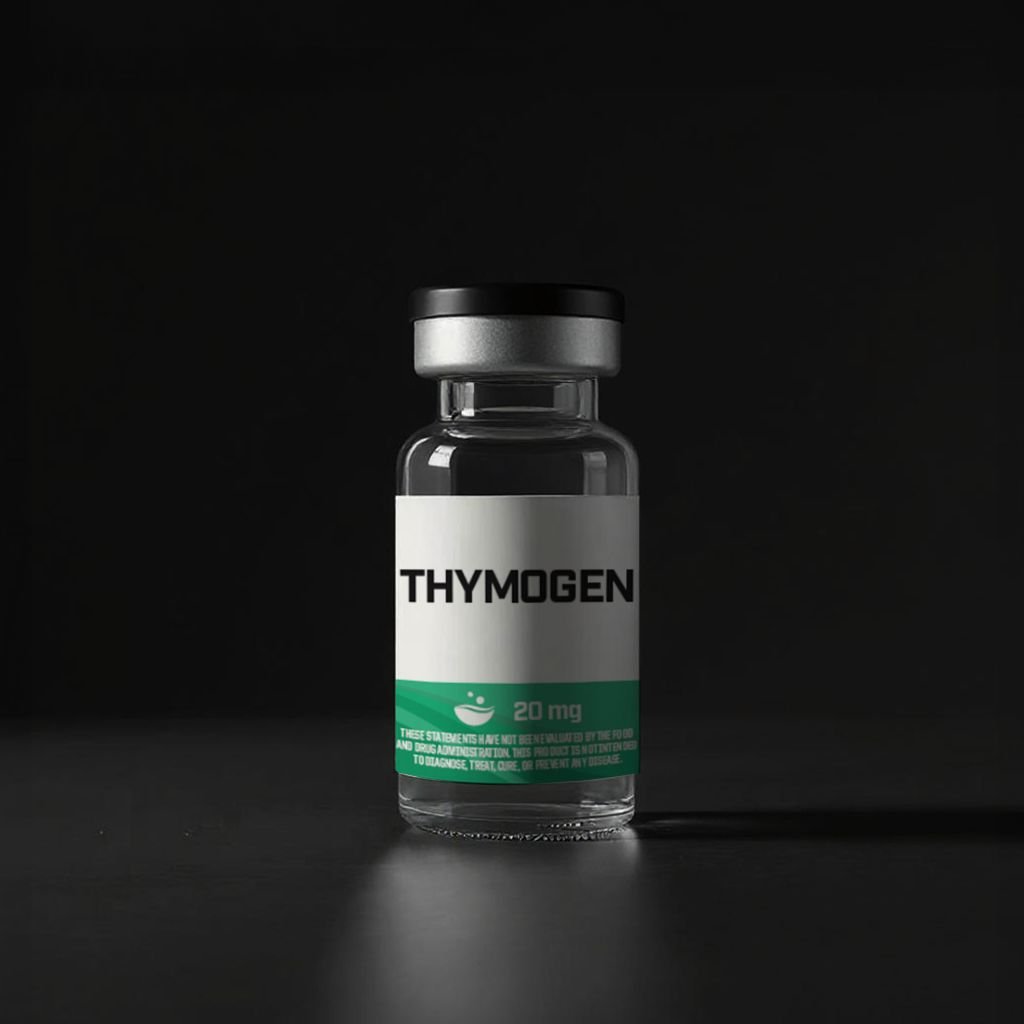
THYMOGEN Research Peptide
What Is Thymogen?
THYMOGEN Research Peptide is a synthetic immunoregulatory dipeptide composed of L-glutamic acid and L-tryptophan, represented as L-Glu-L-Trp, Glu-Trp or EW. It is also called α-glutamyl-tryptophan, while the same chemical sequence has been investigated under the development code IM862. Thymogen originated from research examining soluble thymus fractions for small molecules capable of modifying immune-cell activity. It differs from thymic extracts because it is a chemically defined two-amino-acid peptide rather than a mixture of polypeptides.
Thymogen can be examined through Soma Chems Lab alongside other compounds in the research peptide collection.
Immune-Signalling Mechanisms of Interest
A specific high-affinity Thymogen receptor has not been conclusively identified. Its proposed activity instead comes from observed changes in natural killer cells, cytokine-dependent signalling and haematopoietic-cell models.
In genetically modified mice, L-Glu-L-Trp activity against implanted tumours required functional natural killer or natural killer T cells and the pore-forming protein perforin. Perforin is released from cytotoxic-cell granules and creates openings through which granzymes enter target cells. Activity was reduced in mice lacking interleukin-12, a cytokine that supports natural-killer-cell activation, but remained present in interferon-gamma-deficient mice. These findings indicate an IL-12-associated cytotoxic pathway in animals without proving direct binding to IL-12 receptors or perforin.
Cell-culture research has examined α-Glu-Trp in human peripheral-blood mononuclear cells and vascular endothelial cells exposed to tumour necrosis factor-alpha. Reported effects included modulation of interleukin-8 secretion and ICAM-1 expression. IL-8 recruits and activates neutrophils during inflammation, while ICAM-1 enables circulating leukocytes to adhere to endothelial and immune cells. The experiments show that Thymogen can influence inflammatory readouts, but they do not establish whether it acts through NF-κB, a peptide transporter or another upstream molecular target.
Experimental and Human Evidence
Animal studies have investigated Thymogen in haematopoietic colony formation, radiation-associated immune disruption, infection models and natural-killer-cell activity. The biological response depends strongly on peptide stereochemistry and bond configuration: changing the L-amino acids or the α-peptide linkage alters activity, demonstrating that Glu-Trp is not interchangeable with all chemically similar dipeptides.
Human evidence is mixed and does not support broad conclusions. The L-Glu-L-Trp sequence was clinically evaluated as IM862 in oncology. A phase II renal-cell-carcinoma study reported no significant objective responses, although changes in circulating vascular endothelial growth factor were observed. A later placebo-controlled phase III study in AIDS-related Kaposi sarcoma found that IM862 was not superior to placebo. Older Thymogen studies in immune-related conditions generally had limited methodological reporting and have not received extensive independent replication.
Comparison With Related Peptides
Cortagen Research Peptide is the Ala-Glu-Asp-Pro tetrapeptide developed from brain-cortex peptide research. Cortagen is studied mainly for tissue-specific gene-expression and neural models, whereas Thymogen is a Glu-Trp dipeptide investigated primarily in immune-cell and haematopoietic pathways.
Cartalax Research Peptide is the Ala-Glu-Asp tripeptide associated with cartilage-cell research. Published cellular work examines chondrogenic markers such as SOX9, aggrecan and type II collagen, making its research context distinct from Thymogen’s cytokine and cytotoxic-lymphocyte pathways.
Current Limitations
Thymogen lacks a validated molecular receptor, comprehensive pharmacokinetic characterization and consistent confirmation across independent laboratories. Its hydrophilic structure also produces limited membrane permeability in experimental absorption models. Results obtained with IM862, formulated Thymogen products or modified Glu-Trp analogues should not automatically be treated as evidence for every Glu-Trp research material.
Frequently Asked Questions
Is Thymogen the same as thymosin alpha-1?
No. Thymogen is the two-residue Glu-Trp peptide, while thymosin alpha-1 is a 28-amino-acid peptide with a different structure and evidence base.
Does Thymogen have a confirmed receptor?
No specific receptor has been conclusively validated.
Is Thymogen supported by strong human clinical evidence?
No. Human investigations exist, but results are limited, mixed and insufficient to confirm broad biological outcomes.
Additional information
THYMOGEN Research Peptide
$69.99
Synthetic Glu-Trp dipeptide researched for immune regulation and cytokine signalling pathways.
Reviews
Clear filtersThere are no reviews yet.