
Description
Noopept Spray Research Peptide
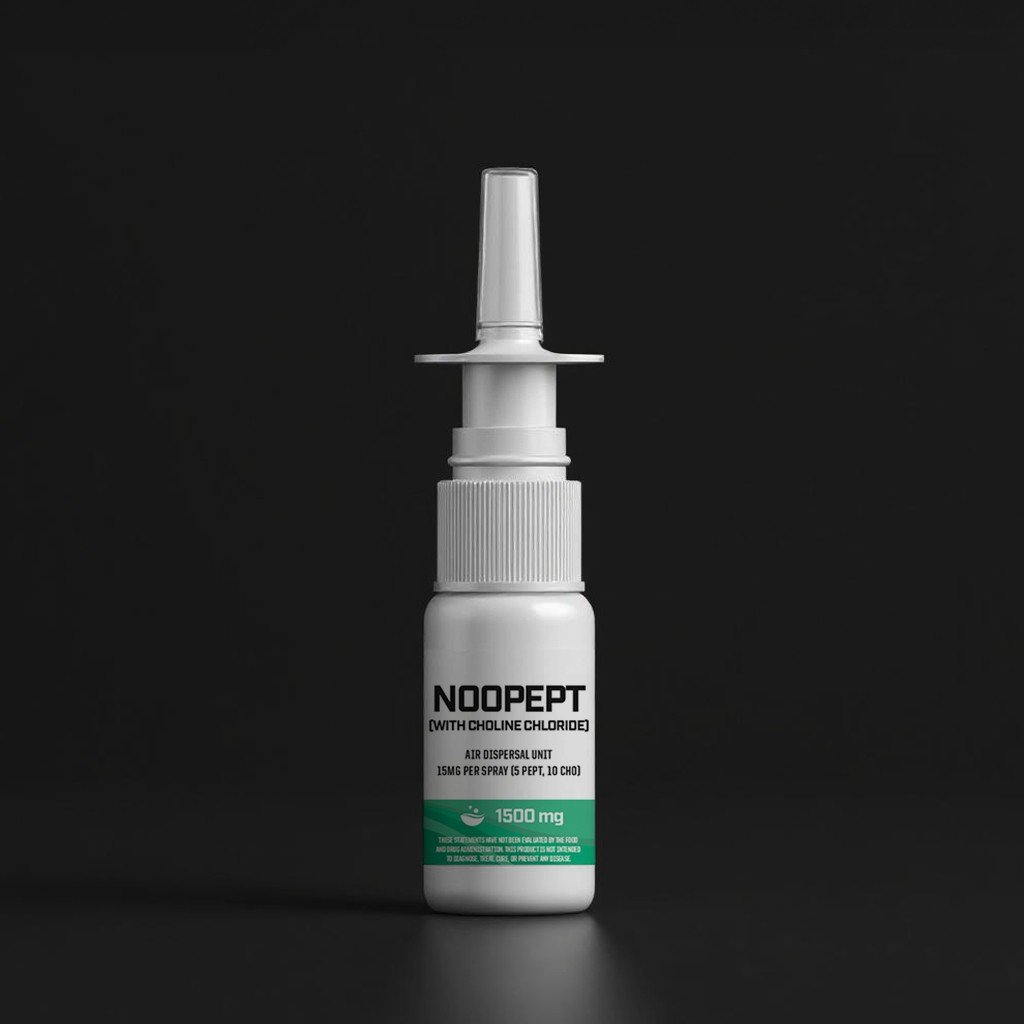
Noopept Spray Research Peptide contains Noopept, also known as omberacetam, GVS-111 and N-phenylacetyl-L-prolylglycine ethyl ester. Despite its common description as a peptide, Noopept is more precisely classified as a synthetic, modified dipeptide-derived small molecule built from proline and glycine. It was developed as a structural analogue of piracetam and is studied mainly in neurochemical, neurotrophic and cognitive-research models. Noopept can be explored through Soma Chems Lab within the peptide sprays research collection.
Neurotrophic Signalling and Synaptic Research
Rodent studies have reported that Noopept alters hippocampal expression of brain-derived neurotrophic factor, or BDNF, and nerve growth factor, or NGF. BDNF supports synaptic plasticity—the ability of neuronal connections to strengthen, weaken and reorganise in response to activity. NGF contributes to the maintenance and function of selected neuronal populations.
Changes in BDNF or NGF expression do not prove that Noopept directly activates their receptors. Instead, they identify neurotrophic signalling as a research pathway potentially influenced downstream of other cellular events. Additional rat studies reported changes in stress-responsive kinases, including JNK and ERK, which help cells translate environmental signals into altered gene expression and protein activity.
Cycloprolylglycine, AMPA Receptors and HIF-1
Rat pharmacokinetic research identified cycloprolylglycine, or CPG, as a Noopept metabolite present in plasma and brain tissue. CPG has separately been studied as a positive modulator of AMPA receptors. AMPA receptors respond to glutamate and mediate rapid excitatory communication between neurons, making them important in synaptic transmission and plasticity.
Research connecting CPG with AMPA and TrkB receptors provides a possible mechanistic direction, but results obtained with the metabolite should not automatically be treated as direct evidence for unchanged Noopept in humans.
In transfected human embryonic kidney cells, Noopept increased the activity of hypoxia-inducible factor 1, or HIF-1. HIF-1 is a transcription factor that changes gene activity when cells experience reduced oxygen availability. This cellular finding supports investigation into oxygen-response signalling, but it does not establish a clinical effect or identify HIF-1 as Noopept’s sole biological target.
Comparison With Related Research Compounds
MT-II Spray Research Peptide is mechanistically distinct from Noopept. MT-II is a cyclic melanocortin peptide analogue studied through melanocortin receptors involved in pigmentation, energy regulation and behavioural signalling. Noopept is not an established melanocortin-receptor agonist and is instead investigated through neurotrophic, glutamatergic and cellular stress-response pathways.
Oxytocin Spray Research Peptide is an endogenous cyclic nonapeptide whose primary target is the oxytocin receptor. OXTR activation commonly engages phospholipase C and intracellular calcium signalling. Noopept does not function as an oxytocin analogue and has no comparably established single receptor target.
Evidence and Research Limitations
Noopept has been evaluated in cell cultures, animal models and a limited number of human studies involving cognitive impairment. Published human investigations are generally small, include open or comparative designs and come largely from a limited research network. They do not establish broad effectiveness, long-term safety or the biological consequences of spray-form research material.
Frequently Asked Questions
Is Noopept a true peptide?
It is more accurately described as a modified dipeptide-derived small molecule rather than a conventional peptide hormone.
Does Noopept directly activate AMPA receptors?
AMPA-related findings are strongly connected to its metabolite cycloprolylglycine, while Noopept’s direct receptor mechanism remains uncertain.
Has Noopept been researched in humans?
Limited human studies exist, but the evidence is substantially smaller and less rigorous than the cellular and animal literature.
Additional information
NOOPEPT (WITH CHOLINE CHLORIDE) SPRAY Research Peptide
$139.98
Noopept Spray Research Peptide is a modified dipeptide-derived compound studied in neurotrophic signaling, glutamatergic pathways and cognitive research models.
Reviews
Clear filtersThere are no reviews yet.