
Description
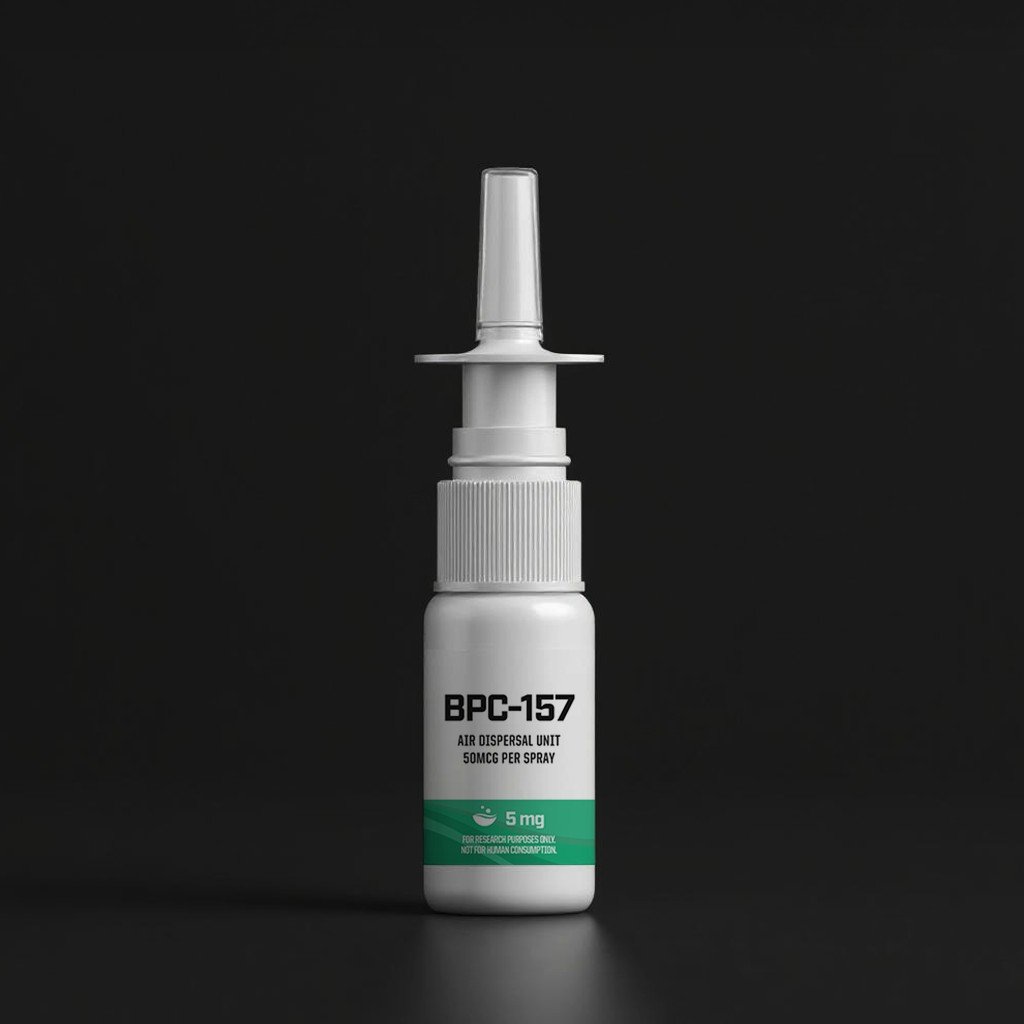
BPC-157 Spray Research Peptide
What Is BPC-157?
BPC-157 Spray Research Peptide refers to a synthetic linear pentadecapeptide with the amino-acid sequence Gly-Glu-Pro-Pro-Pro-Gly-Lys-Pro-Ala-Asp-Asp-Ala-Gly-Leu-Val, commonly abbreviated GEPPPGKPADDAGLV. It is also called Body Protection Compound 157, PL-10 and PL 14736. The sequence was reported from gastric protein fractions, but no confirmed human gene encoding BPC-157 or clearly defined endogenous parent protein has been established. Research primarily examines gastrointestinal cytoprotection, vascular responses and musculoskeletal repair in experimental models.
BPC-157 can be examined alongside other defined research compounds from Soma Chems Lab and the broader peptide spray research collection.
Proposed Signalling Mechanisms
BPC-157 does not have a confirmed high-affinity receptor comparable to established peptide hormones. Cell-based studies instead associate it with several signalling systems involved in vascular growth and cellular movement.
One investigated pathway involves VEGFR2, a receptor tyrosine kinase normally activated by vascular endothelial growth factor. VEGFR2 regulates endothelial-cell survival, migration and new blood-vessel formation. Experiments using human endothelial cells found that BPC-157 increased VEGFR2 expression and internalisation while activating the downstream Akt–eNOS pathway. Akt supports cell survival, while endothelial nitric oxide synthase produces nitric oxide, a signalling molecule that regulates vascular relaxation and blood flow.
Tendon-fibroblast experiments associate BPC-157 with phosphorylation of FAK and paxillin. These proteins organise connections between the extracellular matrix and the actin cytoskeleton, allowing fibroblasts to attach, migrate and respond to mechanical stress. Other cellular work reported increased growth-hormone-receptor expression, but this proposed interaction has not been established as the compound’s primary mechanism.
Evidence Across Research Models
Cellular studies report endothelial tube formation, fibroblast migration and altered signalling-protein activity. Animal experiments, mainly in rats, have investigated tendon, muscle, ligament, gastrointestinal, nerve and vascular-injury models. These studies frequently report changes in blood-vessel formation, collagen organisation, tissue integrity and nitric-oxide-related responses, but animal findings cannot establish comparable effects in humans.
Human evidence remains extremely limited. Published reports include a retrospective knee-pain series without randomisation or placebo control and an intravenous pilot involving only two healthy adults. A registered Phase I study has not supplied robust published efficacy evidence, while formulation-specific pharmacokinetics remain poorly characterised. No controlled human research establishes the biological performance of an intranasal BPC-157 spray.
Comparison With Related Peptides
MT-II Spray Research Peptide is a cyclic melanocortin agonist with identifiable activity at MC1R, MC3R, MC4R and MC5R. BPC-157 is linear and lacks a confirmed primary receptor, with research instead focusing on VEGFR2, nitric-oxide regulation and cell-migration pathways.
AOD-9604 Spray Research Peptide is a modified C-terminal fragment of human growth hormone investigated mainly in lipid-metabolism models. Mouse evidence connects AOD-9604 activity with beta-3 adrenergic signalling, distinguishing it from BPC-157’s proposed vascular and fibroblast-related mechanisms.
Frequently Asked Questions
Is BPC-157 a naturally occurring human peptide?
BPC-157 is manufactured synthetically from a sequence associated with gastric protein research; its exact endogenous origin remains unresolved.
Does BPC-157 bind to one confirmed receptor?
No. VEGFR2, Akt–eNOS and FAK–paxillin signalling have been implicated experimentally, but a definitive primary receptor has not been identified.
Does injectable or oral research prove that BPC-157 spray behaves similarly?
No. Nasal stability, mucosal permeability, absorption and systemic exposure require formulation-specific evidence.
Additional information
BPC-157 157mg Research Peptide
$49.99
BPC-157 Spray Research Peptide is a synthetic pentadecapeptide investigated for its role in vascular signalling, nitric oxide pathways and cellular repair mechanisms.
Reviews
Clear filtersThere are no reviews yet.