
Description
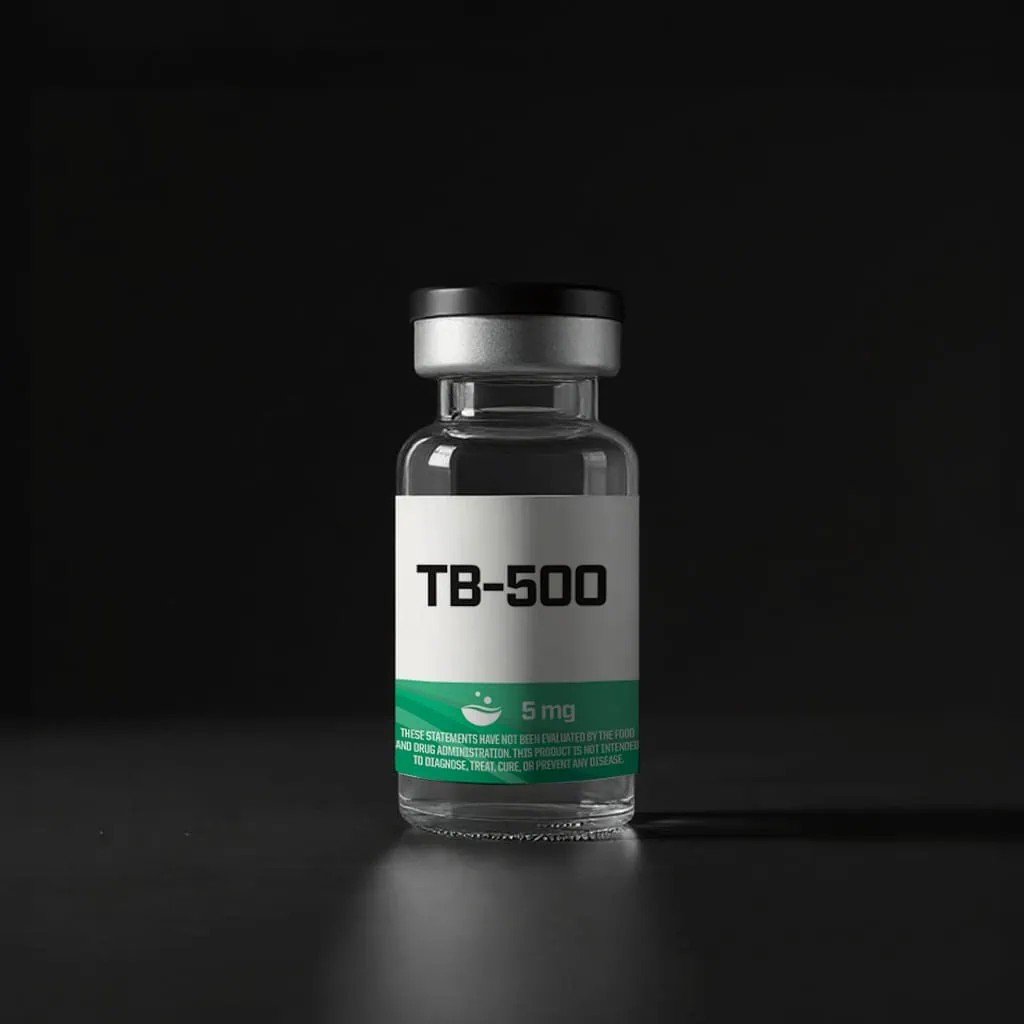
TB-500 Research Peptide
What Is TB-500?
TB-500 Research Peptide is an N-terminally acetylated heptapeptide with the sequence Ac-Lys-Leu-Lys-Lys-Thr-Glu-Thr-Gln, abbreviated Ac-LKKTETQ. Analytical studies identified this sequence in products sold as TB-500 and established that it corresponds to amino-acid residues 17–23 of human thymosin beta-4. TB-500 is therefore a synthetic thymosin beta-4 fragment, not the complete 43-amino-acid thymosin beta-4 protein. Its principal research context involves actin biology, cytoskeletal organisation, cell migration and experimental tissue-repair models.
TB-500 can be examined through Soma Chems Lab alongside other compounds in the broader research peptide collection.
Actin-Binding Mechanism of Interest
Actin exists primarily as soluble globular actin, called G-actin, and polymerised filamentous actin, called F-actin. Cells continuously assemble and dismantle actin filaments to change shape, form adhesion structures and migrate through surrounding tissue.
Full-length thymosin beta-4 binds G-actin in a 1:1 complex and limits its incorporation into F-actin, maintaining a reserve of actin monomers that can be released when cytoskeletal remodelling is required. The LKKTETQ region forms part of thymosin beta-4’s conserved actin-binding motif. However, structural studies show that residues outside this short sequence also contact actin, meaning TB-500 should not automatically be assumed to reproduce the complete actin-sequestering behaviour of full-length thymosin beta-4.
Cell Migration and Repair Research
The non-acetylated LKKTETQ sequence has increased keratinocyte migration and wound closure in cellular and animal skin models. One study proposed involvement of purinergic receptors, which normally respond to extracellular nucleotides such as ATP and participate in calcium signalling, inflammation and cellular movement. Related thymosin beta-4 fragment research has also associated the central actin-binding region with angiogenesis and tissue remodelling. These findings concern LKKTETQ or related fragments and do not establish identical biological activity for Ac-LKKTETQ.
A 2024 analytical investigation characterised TB-500 and several metabolites in laboratory and urine samples but specifically noted that the biological effects of acetylated TB-500 had not been documented. This distinction is essential because N-terminal acetylation can change peptide stability, enzyme susceptibility and molecular interactions.
Comparison With Related Peptides
Vesilute Research Peptide is an ultrashort Glu-Asp dipeptide associated with peptide-bioregulator and gene-expression research. Its proposed chromatin-related mechanism differs from TB-500’s derivation from an actin-binding region of thymosin beta-4.
Prostamax Research Peptide is studied as a short prostate-associated peptide bioregulator. Research surrounding Prostamax focuses primarily on tissue-specific cellular and transcriptional responses rather than the G-actin and F-actin dynamics central to thymosin beta-4 fragment research.
Current Evidence and Limitations
Most mechanistic claims attached to TB-500 are extrapolated from full-length thymosin beta-4 or non-acetylated LKKTETQ experiments. Controlled human trials specifically evaluating Ac-LKKTETQ were not identified. Human studies involving full-length synthetic or recombinant thymosin beta-4 cannot confirm the efficacy, pharmacokinetics or safety of TB-500 because the compounds differ substantially in length and molecular interactions.
Frequently Asked Questions
Is TB-500 the same as thymosin beta-4?
No. TB-500 is Ac-LKKTETQ, a seven-residue fragment, while thymosin beta-4 is a complete 43-amino-acid protein.
What is the main TB-500 research pathway?
Research centres on the thymosin beta-4 actin-binding region and its relationship with cytoskeletal remodelling, cell migration and experimental repair processes.
Does TB-500 have established human clinical evidence?
No controlled human clinical evidence specifically establishing the biological effects of Ac-LKKTETQ has been identified.
Additional information
Tb-500 Research Peptide
$599.85
Synthetic thymosin beta-4 fragment researched for actin biology and cell migration.
Reviews
Clear filtersThere are no reviews yet.