

Description
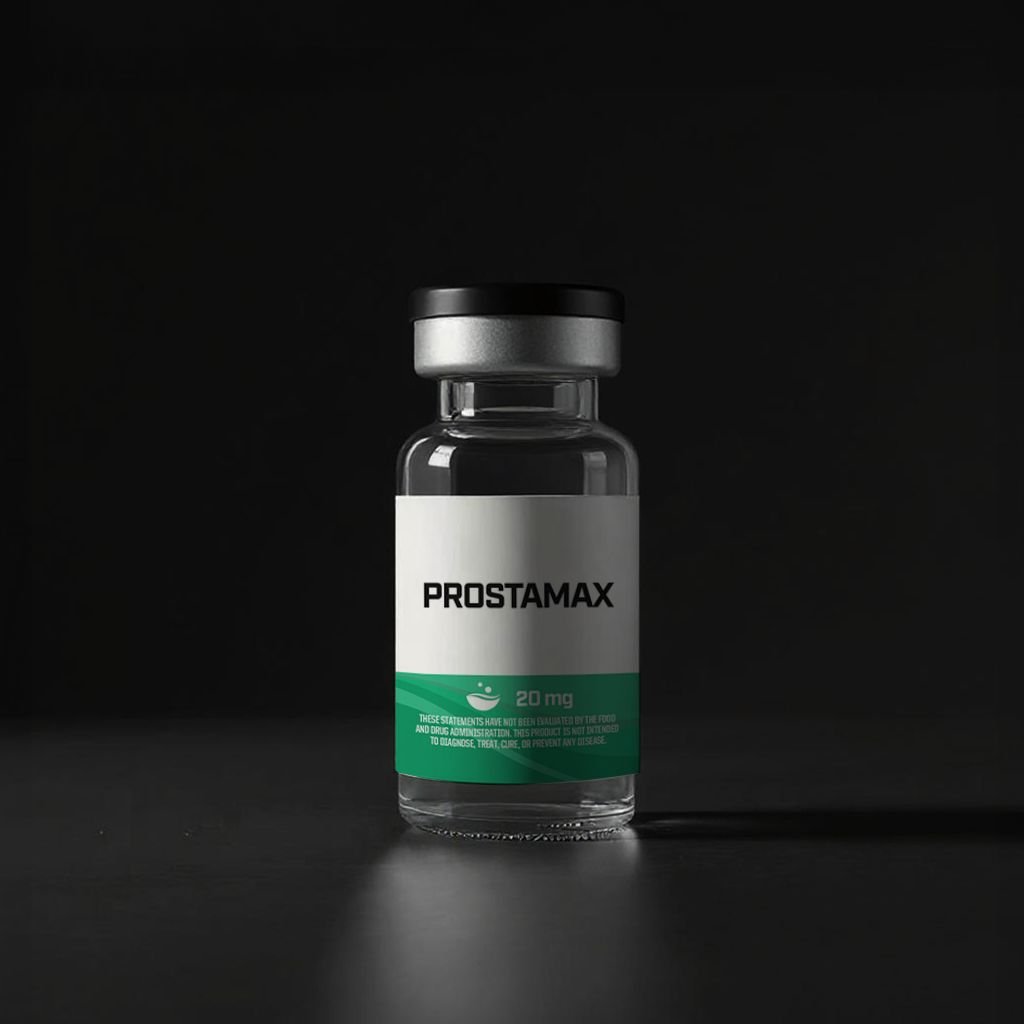
PROSTAMAX Research Peptide
What Is Prostamax?
PROSTAMAX Research Peptide is a synthetic tetrapeptide composed of L-lysine, L-glutamic acid, L-aspartic acid and L-proline, represented by the sequence Lys-Glu-Asp-Pro or KEDP. It is also described as lysyl-glutamyl-aspartyl-proline and belongs to the ultrashort peptide-bioregulator class developed in prostate-tissue and ageing research. PubChem identifies Prostamax as H-Lys-Glu-Asp-Pro-OH, while an originating patent defines the same four-residue sequence as the active compound studied in prostate and bladder models.
Prostamax can be examined through Soma Chems Lab alongside compounds in its research peptide collection.
Proposed Chromatin and Tissue-Regulation Mechanisms
No specific Prostamax receptor, transporter, enzyme target or directly regulated gene has been conclusively validated. Its proposed mechanism comes mainly from chromatin studies and organotypic tissue cultures rather than conventional receptor pharmacology.
Chromatin consists of DNA wrapped around histone proteins to form nucleosomes. Compact heterochromatin is generally less accessible to transcriptional machinery than relaxed chromatin. A human-lymphocyte study using differential scanning microcalorimetry found small shifts in chromatin-denaturation behaviour after Prostamax exposure. The authors interpreted these changes as partial relaxation of higher-order chromatin fibres, but the experiment did not identify a specific DNA-binding motif, prove direct peptide–DNA binding or demonstrate predictable activation of prostate-related genes.
In organotypic cultures, Prostamax was tested on prostate explants from young and aged rats. Explants preserve more of a tissue’s native cell-to-cell organization than isolated cell lines, and researchers measured growth zones around cultured tissue fragments. The peptide produced a tissue-associated stimulatory response in prostate explants, supporting research into cellular proliferation and tissue remodelling. This assay did not establish whether the response involved androgen receptors, prostate-specific antigen, growth-factor receptors or another pathway.
Preclinical and Human Evidence
Animal evidence includes bacterial and aseptic prostatitis models. Rat studies reported reduced histological signs such as tissue swelling, vascular hyperemia, lymphoid infiltration, sclerosis and atrophy after Prostamax exposure. These observations describe tissue-level outcomes; they do not establish a confirmed anti-inflammatory molecular target or prove equivalent effects in humans.
Patent records describe small human observations involving chronic prostatitis and urinary symptoms, but these reports do not provide the methodological detail expected from modern randomized, independently replicated clinical trials. Human lymphocyte findings therefore remain mechanistic laboratory evidence rather than clinical proof of prostate effects.
Comparison With Related Peptides
PT-141 Research Peptide is bremelanotide, a cyclic melanocortin agonist with defined activity at receptors including MC4R and an established human clinical evidence base. Prostamax has no confirmed melanocortin activity and is investigated primarily through prostate explants, inflammatory models and chromatin structure.
GLP3 RETA Research Peptide refers to retatrutide, an engineered agonist of the GLP-1, GIP and glucagon receptors. These receptors regulate glucose-dependent insulin secretion, appetite-related signalling and energy metabolism. Retatrutide has undergone randomized phase II studies and entered phase III development, whereas Prostamax lacks a validated receptor and comparable clinical evidence.
Current Evidence and Limitations
Prostamax research is limited by small experimental datasets, concentration within a narrow research network, incomplete pharmacokinetic characterization and limited independent replication. Findings involving rat prostate tissue or human lymphocytes should not be presented as evidence that KEDP treats prostatitis, prostate enlargement, cancer or urinary disorders.
Frequently Asked Questions
Is Prostamax the same as KEDP?
Yes. Prostamax is the common research name for the Lys-Glu-Asp-Pro tetrapeptide abbreviated KEDP.
Does Prostamax bind the androgen receptor?
No direct androgen-receptor binding or activation has been established.
Has Prostamax been validated in large human clinical trials?
No. Its evidence base is predominantly cellular, tissue-culture, animal and patent-derived.
Additional information
PROSTAMAX
$64.99
Synthetic KEDP tetrapeptide for prostate-tissue and chromatin research.
Reviews
Clear filtersThere are no reviews yet.