
Description
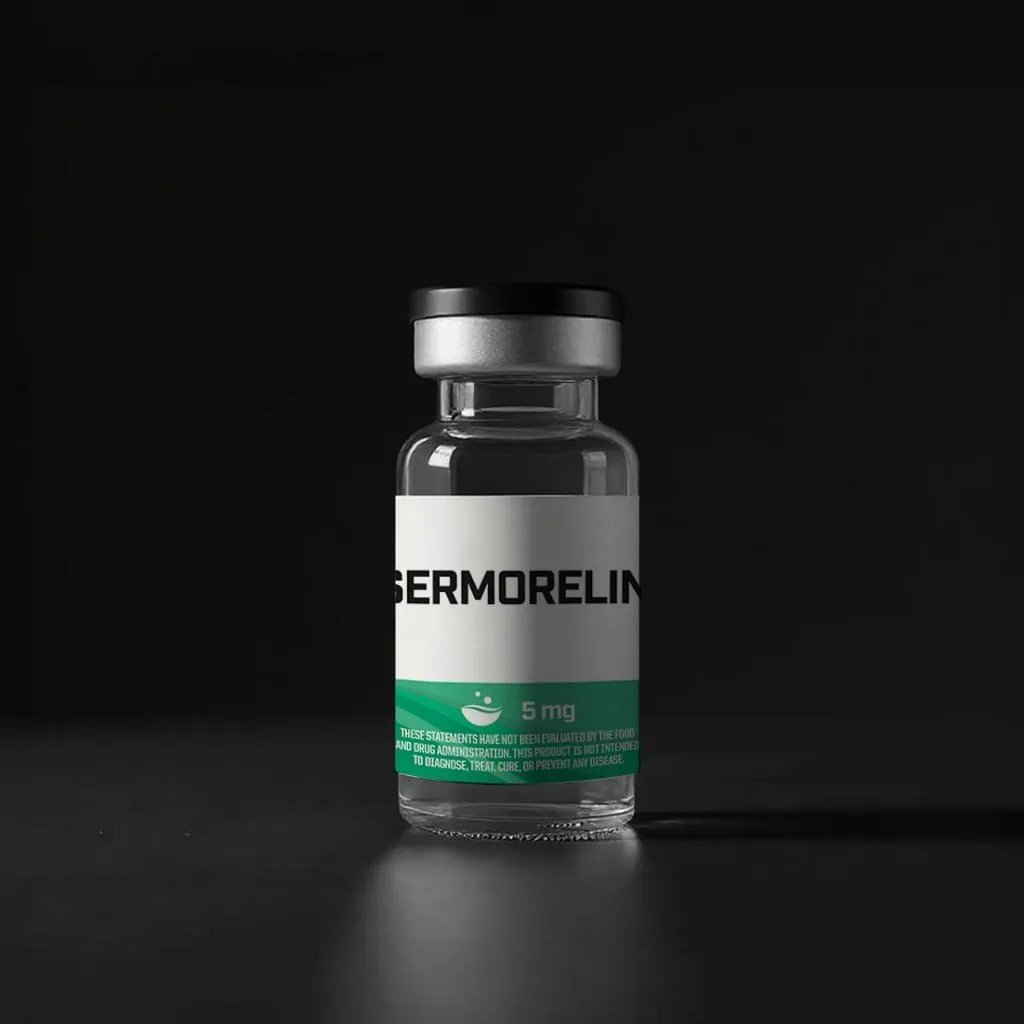
SERMORELIN Research Peptide
What Is Sermorelin?
SERMORELIN Research Peptide is a synthetic, C-terminally amidated 29-amino-acid peptide corresponding to residues 1–29 of human growth hormone-releasing hormone, or GHRH. It is also known as GHRH(1–29)-NH2, GRF(1–29)-NH2 and sermorelin acetate when supplied as the acetate salt. These 29 residues contain the minimal sequence needed for substantial GHRH-receptor activity, making sermorelin an endocrine research peptide rather than recombinant growth hormone. Its main research context is pituitary growth-hormone secretion, somatotroph function and the downstream GH–IGF-1 axis.
Sermorelin can be examined through Soma Chems Lab alongside compounds in the research peptide collection.
GHRH-Receptor Signalling
Sermorelin activates the growth hormone-releasing hormone receptor, a seven-transmembrane G-protein-coupled receptor expressed predominantly on anterior-pituitary somatotroph cells. This receptor normally translates hypothalamic GHRH pulses into growth-hormone synthesis and secretion. Activation couples mainly to the stimulatory G protein Gs, which activates adenylyl cyclase, raises cyclic AMP and stimulates protein kinase A. PKA-dependent signalling influences calcium-channel activity, secretory-granule release and transcription factors such as CREB and PIT-1, which support somatotroph identity and growth-hormone gene expression.
Released growth hormone binds the GH receptor in liver and peripheral tissues, activating JAK2–STAT signalling and promoting production of insulin-like growth factor 1 and IGF-binding proteins. IGF-1 mediates several growth-related responses, while GH also has direct metabolic actions. Because sermorelin requires responsive pituitary somatotrophs, its effects depend on preserved pituitary reserve and differ from administering growth hormone directly.
Cellular, Animal and Human Evidence
Receptor and pituitary-cell studies establish GHRH-dependent cyclic-AMP, calcium and MAPK signalling, but they primarily describe the endogenous receptor system rather than every property of a research preparation. Animal work helped define the active N-terminal GHRH sequence and its capacity to provoke endogenous growth-hormone release.
Human studies show that GHRH(1–29)-NH2 can stimulate growth-hormone secretion and alter IGF-1. Trials in children with hypothalamic growth-hormone deficiency reported increased growth velocity, although direct growth-hormone treatment produced larger responses in comparative studies. Some trials also observed anti-GHRH antibodies and declining IGF-1 responses during prolonged exposure, showing that endocrine responses were not uniform or continuously sustained. Sermorelin was also investigated as a pituitary stimulation agent because a response indicates retained somatotroph capacity.
Comparison With Related Peptides
BPC-157 Research Peptide is a synthetic 15-residue peptide studied mainly in cellular and animal vascular-repair models involving VEGFR2–Akt–eNOS and nitric-oxide signalling. It is not a GHRH analogue and has no established pituitary secretagogue mechanism.
Epithalon Research Peptide is the Ala-Glu-Asp-Gly tetrapeptide associated with short-peptide bioregulation, gene-expression and telomerase research. Its proposed nuclear and chromatin-related effects are mechanistically distinct from sermorelin’s defined cell-surface GHRH-receptor pathway.
Current Evidence and Limitations
Sermorelin has a verified molecular identity, receptor and human endocrine evidence, but its short circulating persistence limits sustained stimulation. Clinical findings are concentrated in diagnostic endocrinology and selected growth-hormone-deficient populations and cannot be generalized to ageing, body composition, athletic performance or other unstudied contexts. Findings from historical regulated formulations also do not establish the identity, pharmacokinetics or biological equivalence of unrelated research materials.
Frequently Asked Questions
Is sermorelin the same as growth hormone?
No. Sermorelin stimulates pituitary GHRH receptors to release endogenous growth hormone; it is not growth hormone itself.
Is sermorelin the same as tesamorelin?
No. Sermorelin is amidated GHRH(1–29), while tesamorelin is a modified full-length 44-residue GHRH analogue.
Does sermorelin require a functional pituitary?
Yes. Its principal mechanism depends on responsive pituitary somatotroph cells and differs from direct growth-hormone replacement.
Additional information
SERMORELIN Research Peptide
$49.99
Synthetic GHRH 1-29 peptide for growth hormone signalling research.
Reviews
Clear filtersThere are no reviews yet.