
Description
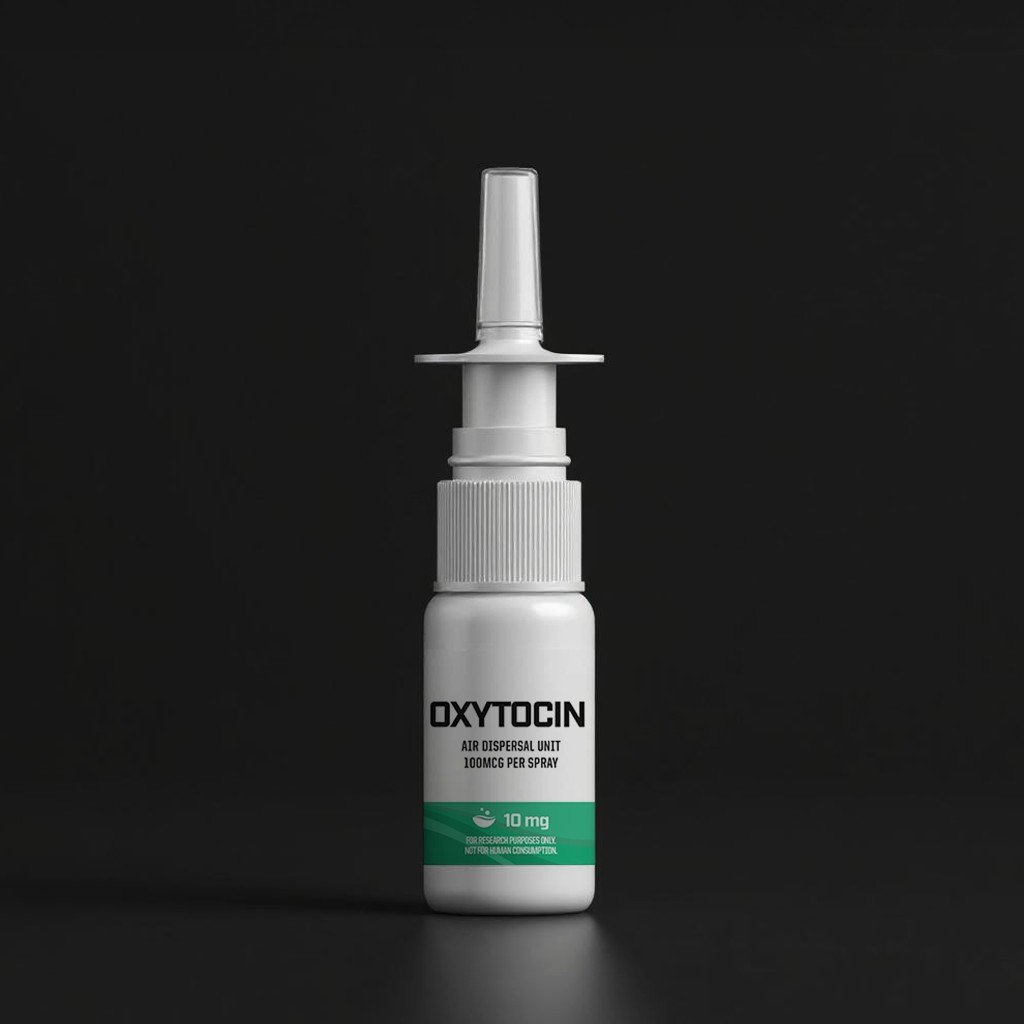
Oxytocin Spray Research Peptide
Oxytocin Spray Research Peptide contains oxytocin, an endogenous cyclic nonapeptide hormone and neuropeptide composed of nine amino acids with a disulfide bridge between its first and sixth cysteine residues. Oxytocin is synthesized primarily by neurons in the paraventricular and supraoptic nuclei of the hypothalamus and released both into the bloodstream and within neural circuits. Research available through Soma Chems Lab and its peptide sprays research collection examines oxytocin across receptor-signalling, neuroendocrine and social-processing models.
Oxytocin Receptor Signalling
Oxytocin primarily binds to the oxytocin receptor, or OXTR, a G-protein-coupled receptor expressed in reproductive tissues, vascular cells and multiple regions of the nervous system. OXTR commonly couples to the Gq/11 protein, which activates phospholipase C. This enzyme separates a membrane phospholipid into the signalling molecules IP3 and DAG. IP3 releases calcium from intracellular stores, while DAG can activate protein kinase C, producing tissue-specific changes in contraction, secretion and cellular communication.
Human cell studies have shown that oxytocin increases intracellular calcium through this pathway and that prolonged receptor stimulation can rapidly reduce receptor responsiveness. Oxytocin also has measurable affinity for vasopressin V1a receptors, although its affinity is greater for OXTR. This receptor overlap is relevant when interpreting experiments because oxytocin and vasopressin are structurally related nonapeptides with partially intersecting signalling systems.
Neuroendocrine and Behavioural Research
Peripheral oxytocin signalling is well established in uterine contraction and milk ejection. Central research investigates how oxytocinergic signalling influences attention to social information, stress-related processing, emotional recognition and communication between brain regions.
Human intranasal studies have reported changes in social attention, neural oscillations, regional cerebral blood flow and functional connectivity. One human study also detected increased oxytocin concentrations in blood and cerebrospinal fluid following intranasal exposure. These findings confirm measurable biological responses, but individual trials have produced variable or null behavioural results.
Comparison With Related Research Compounds
Glutathione Spray Research Peptide belongs to a different biological system. Glutathione is a naturally occurring tripeptide that supports cellular redox balance and acts as a cofactor for glutathione peroxidase and glutathione transferase enzymes. It is studied primarily in antioxidant and oxidative-stress models rather than OXTR-mediated neuroendocrine signalling.
Noopept Spray Research Peptide is also mechanistically distinct. Noopept, or N-phenylacetyl-L-prolylglycine ethyl ester, is a synthetic dipeptide-derived compound investigated mainly in cognitive, neurotrophic and neuroprotection models. Rodent studies have examined its effects on hippocampal NGF and BDNF expression, whereas oxytocin research centres on OXTR signalling and neuroendocrine communication.
Current Evidence and Limitations
Oxytocin has a clearly identified endogenous receptor and substantial cellular, animal and human research. However, findings from intranasal studies depend on delivery method, experimental setting, participant characteristics and outcome selection. Human trials have not demonstrated one consistent effect across all social-cognitive measures, and changes in brain activity cannot automatically be interpreted as clinical benefit.
Frequently Asked Questions
Is oxytocin a peptide?
Yes. Oxytocin is a cyclic peptide containing nine amino acids.
What is oxytocin’s primary biological target?
Its principal target is OXTR, a G-protein-coupled receptor that commonly activates phospholipase C and intracellular calcium signalling.
Has oxytocin been studied in humans?
Yes. Human studies include biochemical, behavioural and neuroimaging investigations, although results vary across experimental designs and populations.
Additional information
OXYTOCIN SPRAY Research Peptide
$49.99
Oxytocin Spray Research Peptide is a neuropeptide hormone research compound associated with social-behavior, bonding, and signaling models.
Reviews
Clear filtersThere are no reviews yet.