
Description
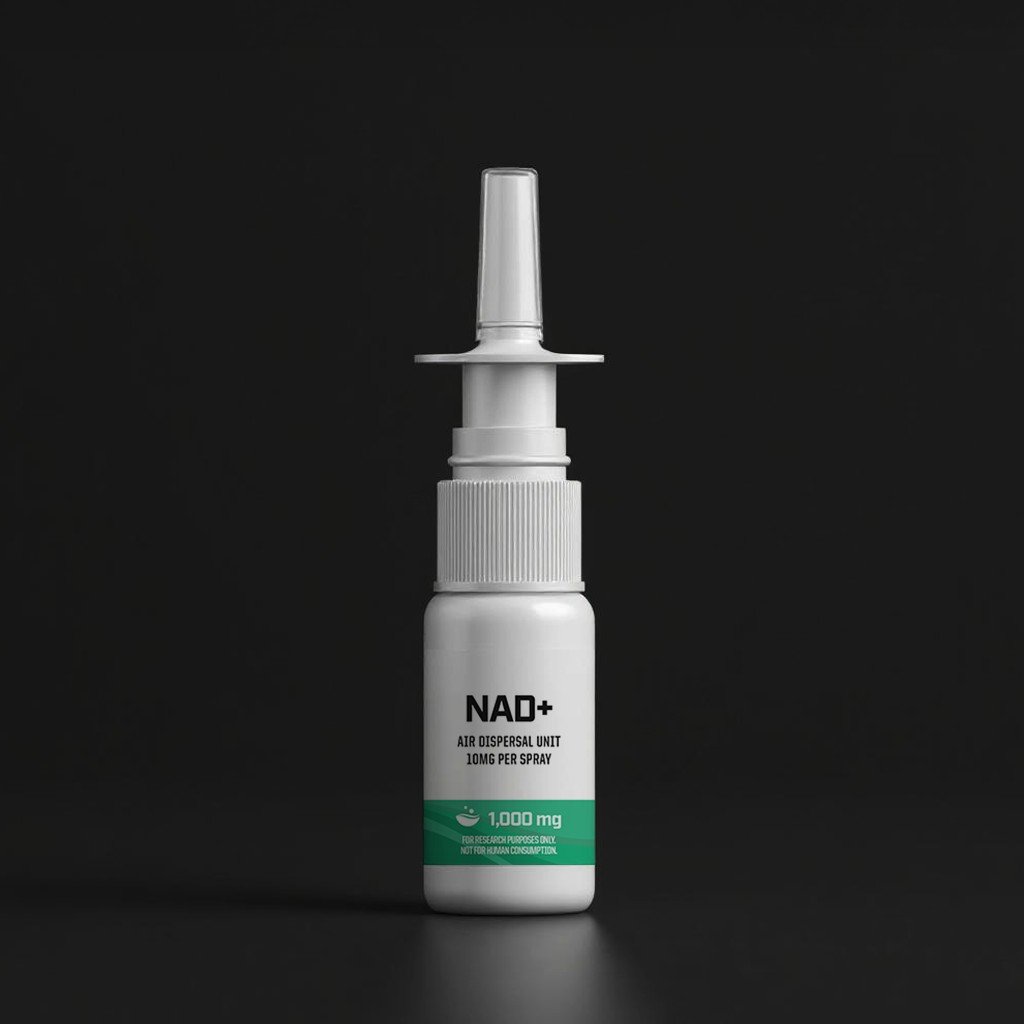
NAD+ Spray Research Peptide
What Is NAD+?
NAD+ Spray Research Peptide refers to oxidized nicotinamide adenine dinucleotide, also called β-NAD+ or coenzyme I. Despite the commercial product name, NAD+ is not a peptide; it is an endogenous pyridine dinucleotide coenzyme formed from adenine- and nicotinamide-containing nucleotides. Cells produce it through salvage, Preiss–Handler and tryptophan-derived pathways, with NAMPT converting nicotinamide into NMN and NMNAT enzymes completing NAD+ formation. Researchers examining defined metabolic compounds can review NAD+ through Soma Chems Lab and the wider peptide spray research collection.
Redox and Enzyme-Dependent Mechanisms
NAD+ accepts a hydride during oxidation reactions and becomes NADH. Dehydrogenase enzymes use this redox pair during glycolysis, fatty-acid oxidation and the tricarboxylic-acid cycle. NADH subsequently transfers electrons into mitochondrial respiration, linking nutrient breakdown with ATP production. The NAD+:NADH ratio therefore influences metabolic reaction direction rather than serving as a simple measurement of cellular energy.
NAD+ is also consumed by signalling enzymes. Sirtuins require it to remove acyl groups from proteins, modifying transcription factors, histones and metabolic enzymes. PARP1 cleaves NAD+ to build ADP-ribose chains at DNA-damage sites, helping organise repair machinery while potentially depleting cellular NAD+ when excessively activated. CD38 hydrolyses NAD+ into ADP-ribose-related metabolites involved in calcium signalling, and mouse experiments identify increased CD38 activity as a contributor to age-associated NAD+ decline. Cell-culture studies additionally show that extracellular NAD+ may be degraded into NMN, nicotinamide riboside and nicotinamide before intracellular resynthesis, making exposure dependent on cell type and extracellular enzymes.
Evidence Across Research Models
Cellular evidence firmly establishes NAD+ as a redox cofactor and substrate for sirtuins, PARPs and CD38. In rat models of focal cerebral ischemia and traumatic brain injury, intranasal NAD+ increased measured brain NAD+ and was associated with reduced experimental tissue injury or neuronal death. These findings remain preclinical and do not establish equivalent human outcomes.
Human evidence for NAD+ spray remains limited. A registered pilot trial includes nasal NAD+ within multi-intervention gerotherapy combinations, preventing any outcome from being attributed solely to NAD+ without component-specific analysis. Human research involving NR or NMN examines precursors rather than intact NAD+, while patents describing nasal NAD+ formulations document proposed inventions rather than verified biological performance.
Comparison With Related Spray Compounds
PT-141 Spray Research Peptide is a synthetic cyclic melanocortin receptor agonist studied through MC1R, MC3R, MC4R and MC5R signalling. NAD+ instead participates directly in redox chemistry and enzyme-catalysed ADP-ribose transfer, giving the compounds fundamentally different molecular targets.
Dream Catcher Spray Research Peptide is presented as a blend-style, rest-focused formulation without a verified standardized active molecule. A target-by-target scientific comparison is therefore not possible until its complete composition and ingredient identities are confirmed.
Frequently Asked Questions
Are NAD+ and NADH the same?
No. NAD+ is the oxidized electron-accepting form, whereas NADH is the reduced electron-carrying form.
Is NAD+ a peptide?
No. NAD+ is a dinucleotide coenzyme, not a chain of amino acids.
Does animal intranasal research prove that every NAD+ spray has the same activity?
No. Formulation, stability, mucosal transport, extracellular degradation and analytical identity can substantially alter exposure.
Additional information
NAD+ Research Peptide
$49.99
NAD+ Spray Research Peptide is an endogenous coenzyme investigated for its role in cellular energy metabolism, redox reactions and NAD+-dependent enzyme pathways.
Reviews
Clear filtersThere are no reviews yet.