


Description
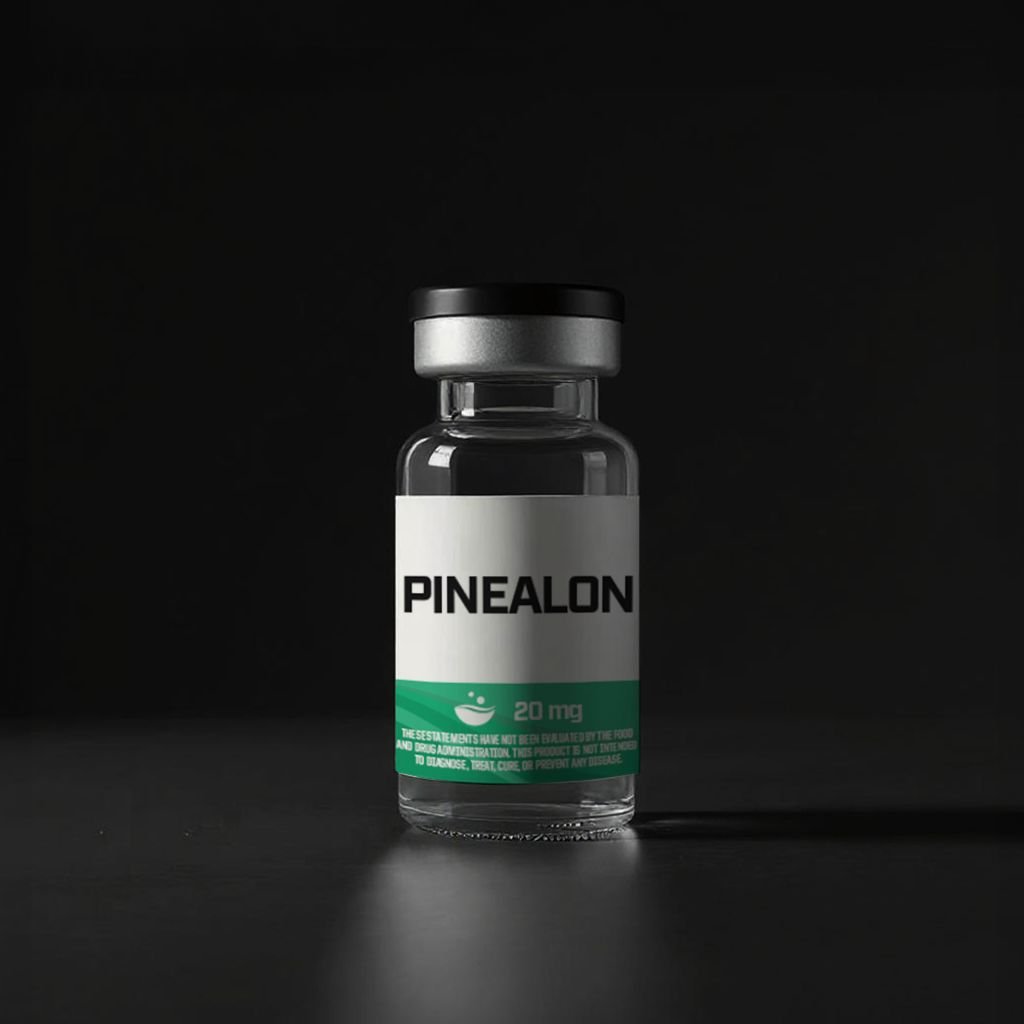
PINEALON Research Peptide
What Is Pinealon?
PINEALON Research Peptide is a synthetic ultrashort tripeptide composed of L-glutamic acid, L-aspartic acid and L-arginine, represented by the sequence Glu-Asp-Arg or EDR. It is also called EDR peptide and belongs to the short peptide-bioregulator class developed through Russian neurobiology and gerontology research. EDR was identified within the polypeptide preparation Cortexin and is studied mainly in neuronal gene regulation, oxidative-stress responses, synaptic plasticity and experimental neuroprotection.
Pinealon can be examined through Soma Chems Lab alongside other compounds in the broader research peptide collection.
Proposed Gene-Regulation Mechanism
No conventional Pinealon receptor or directly inhibited enzyme has been conclusively identified. Biophysical experiments using spectroscopy, nuclear magnetic resonance, viscosimetry and molecular-dynamics modelling indicate that EDR can form complexes with double-stranded DNA. This has produced the hypothesis that Pinealon may influence transcription through interactions with DNA or chromatin rather than through a standard cell-surface receptor.
Molecular modelling has predicted EDR interactions with promoter regions associated with CASP3, TP53, SOD2, GPX1, PPARA, PPARG, APOE, GAP43 and IGF1. CASP3 and TP53 participate in apoptosis and cellular stress responses; SOD2 and GPX1 encode antioxidant enzymes that limit reactive-oxygen damage; PPARA and PPARG regulate metabolic and inflammatory gene networks; and GAP43 contributes to neurite growth and synaptic remodelling. These promoter-interaction models remain computational and do not prove that Pinealon directly controls each gene inside the human brain.
Cultured mouse cortical-cell experiments reported increased serotonin expression following exposure to EDR. Serotonin is a neurotransmitter involved in mood, cognition and neuronal communication, but Pinealon has not been established as a serotonin-receptor agonist or a serotonin-reuptake inhibitor.
Cellular, Animal and Human Evidence
In neuronal cultures modelling Alzheimer’s and Huntington’s disease, EDR was associated with preservation or restoration of dendritic spines. Dendritic spines are small postsynaptic structures that receive excitatory signals and change shape during learning and synaptic plasticity. These findings provide preclinical evidence but do not demonstrate reversal of human neurodegenerative disease.
Animal research has investigated Pinealon in prenatal hyperhomocysteinaemia, hypoxia, behavioural and age-related nervous-system models. Reported outcomes include changes in neuronal survival, oxidative-stress markers and behavioural performance, but results from developing or ageing rodents cannot establish comparable human effects.
Limited human reports describe Pinealon alongside standard care in older adults and participants with long-term consequences of traumatic brain injury. These studies were small, geographically concentrated and incompletely replicated, preventing firm conclusions about cognition, neurological recovery or clinical effectiveness.
Comparison With Related Peptides
SS-31 Research Peptide is a mitochondria-targeting tetrapeptide that interacts with cardiolipin in the inner mitochondrial membrane. Its research centres on respiratory-chain organization and ATP-producing bioenergetics, whereas Pinealon research focuses primarily on neuronal gene expression and synaptic structures.
GLP1 SEMA Research Peptide is associated with semaglutide and GLP-1 receptor-agonist research. GLP-1 receptor activation regulates glucose-dependent insulin secretion, glucagon signalling and appetite-related pathways. Pinealon has no established GLP-1 receptor activity and belongs to a fundamentally different neuroepigenetic research class.
Current Evidence and Limitations
Pinealon lacks a validated primary receptor, comprehensive pharmacokinetic characterization and large independently replicated human trials. Much of the evidence originates from one connected research network, while several proposed gene targets rely on molecular modelling rather than direct genomic confirmation.
Frequently Asked Questions
Is Pinealon derived from the pineal gland?
No. Published research identifies EDR within Cortexin-derived peptide research rather than as a pineal-gland hormone.
Does Pinealon have a confirmed receptor?
No specific high-affinity receptor has been validated.
Is Pinealon supported by strong human evidence?
No. Human observations are limited, while most mechanistic evidence remains cellular, computational or animal-based.
Additional information
PINEALON Research Peptide
$64.99
Synthetic EDR tripeptide researched for neuronal and gene-regulation pathways.
Reviews
Clear filtersThere are no reviews yet.