

Description
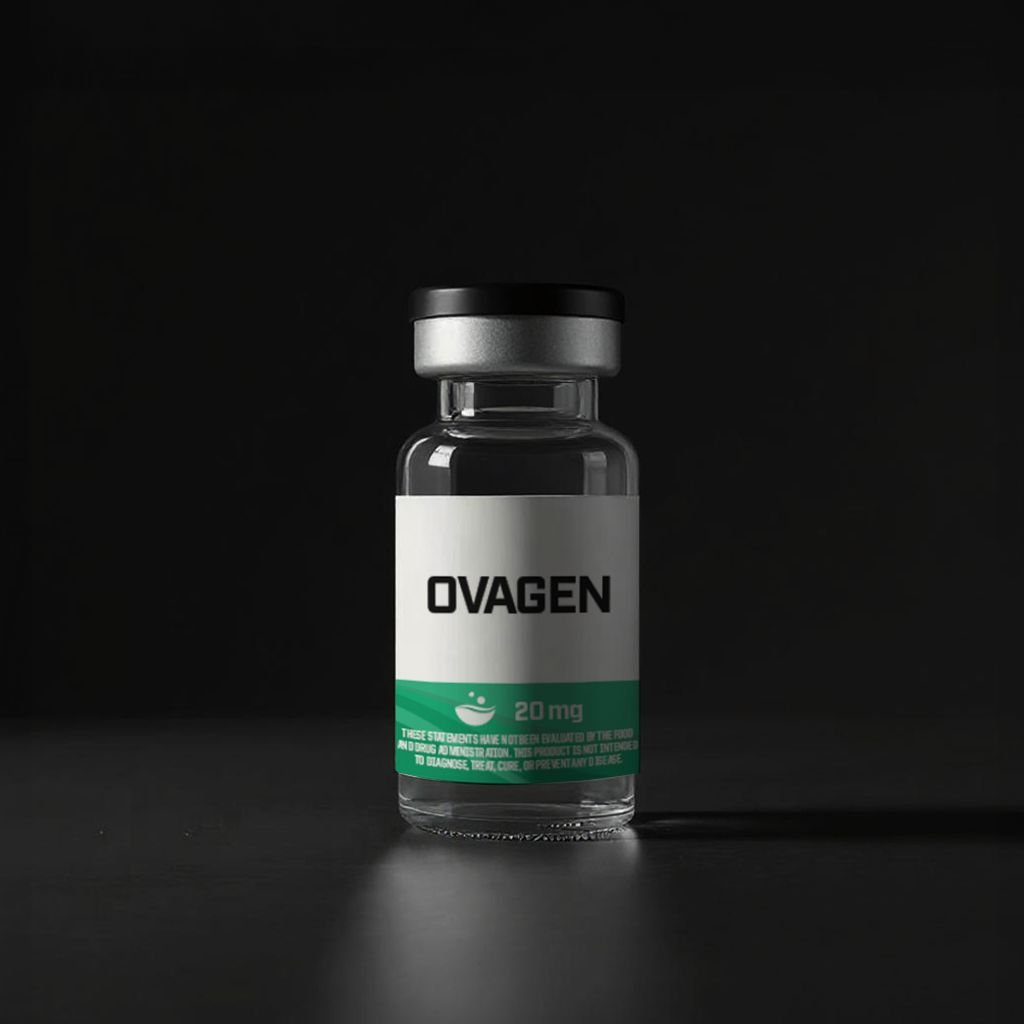
OVAGEN Research Peptide
What Is OVAGEN?
OVAGEN Research Peptide generally refers to glutamyl-aspartyl-leucine, an ultrashort synthetic tripeptide written as Glu-Asp-Leu or EDL. It belongs to the experimental peptide-bioregulator class associated with research into tissue signalling, cellular stress responses and gene-expression regulation. OVAGEN is commonly described as liver- and gastrointestinal-associated within this research framework, although no tissue-specific receptor or conclusively validated hepatic target has been established.
OVAGEN is available through Soma Chems Lab alongside compounds in the broader research peptide collection.
Research Overview
Researchers study EDL primarily for its possible influence on cellular stress, oxidative balance and gene-regulatory processes. The clearest indexed experiments involve animal models of acute kidney injury, where researchers measured kidney filtration, urinary protein, electrolyte handling, antioxidant-enzyme activity and lipid peroxidation. Separate biochemical work found that EDL could inhibit HIV-1 protease under specific acidic laboratory conditions, although this isolated enzyme result does not establish antiviral activity in cells or humans. Most evidence is therefore biochemical or animal-based, with no strong body of controlled human research confirming organ-specific outcomes.
Proposed Mechanisms of Interest
Unlike receptor-targeted peptides, OVAGEN has no confirmed cell-surface receptor. The broader short-peptide bioregulator model proposes that ultrashort peptides can enter cells and influence chromatin—the DNA–protein structure that controls whether particular genes are accessible for transcription. Direct interactions between several short peptides and DNA have been reported, but the precise genomic sequences, transcription factors and downstream genes selectively regulated by EDL remain insufficiently mapped. OVAGEN should therefore be described as a proposed gene-regulatory peptide rather than a validated receptor agonist.
In rat kidney-injury models, EDL was associated with preservation of diuresis and glomerular filtration, reduced urinary protein loss and changes in antioxidant-enzyme activity. Antioxidant enzymes normally limit damage from reactive oxygen species, while lipid peroxidation reflects oxidative injury to cell membranes. These observations identify renal stress and redox regulation as direct experimental interests, but they do not prove equivalent activity in healthy animals or humans.
Comparison With Related Peptides
MOTS-c Research Peptide is a 16-amino-acid peptide encoded within mitochondrial DNA. MOTS-c is investigated through the folate–AICAR–AMPK pathway, which links mitochondrial signalling to cellular energy sensing. OVAGEN is a three-amino-acid synthetic bioregulator without mitochondrial origin or an established connection to AMPK activation.
GHK-Cu Research Peptide is a copper-binding complex formed from glycyl-histidyl-lysine. Its cellular and animal research focuses on fibroblast activity, collagen-associated extracellular matrix production and matrix metalloproteinases involved in tissue remodelling. OVAGEN does not bind copper as its defining mechanism and lacks GHK-Cu’s established extracellular-matrix research profile.
Current Evidence and Limitations
OVAGEN research is limited by the absence of a validated primary receptor, sparse independent replication and little compound-specific human evidence. Liver and gastrointestinal associations are frequently stated within the peptide-bioregulator framework, but direct published EDL research is more clearly documented in renal animal models and isolated biochemical systems. Human effectiveness, pharmacokinetics and tissue selectivity remain unconfirmed.
Frequently Asked Questions
What is OVAGEN mainly researched for?
OVAGEN is investigated in short-peptide bioregulation, cellular stress, oxidative processes and experimental tissue-function models.
Does OVAGEN directly target a receptor?
No specific OVAGEN receptor has been confirmed. Proposed mechanisms centre on cellular entry and possible regulation of chromatin or gene expression.
Is OVAGEN supported by human clinical evidence?
Published evidence is predominantly biochemical and animal-based, with insufficient controlled human data to establish clinical outcomes.
For laboratory research use only.
Reviews
Clear filtersThere are no reviews yet.