
Description
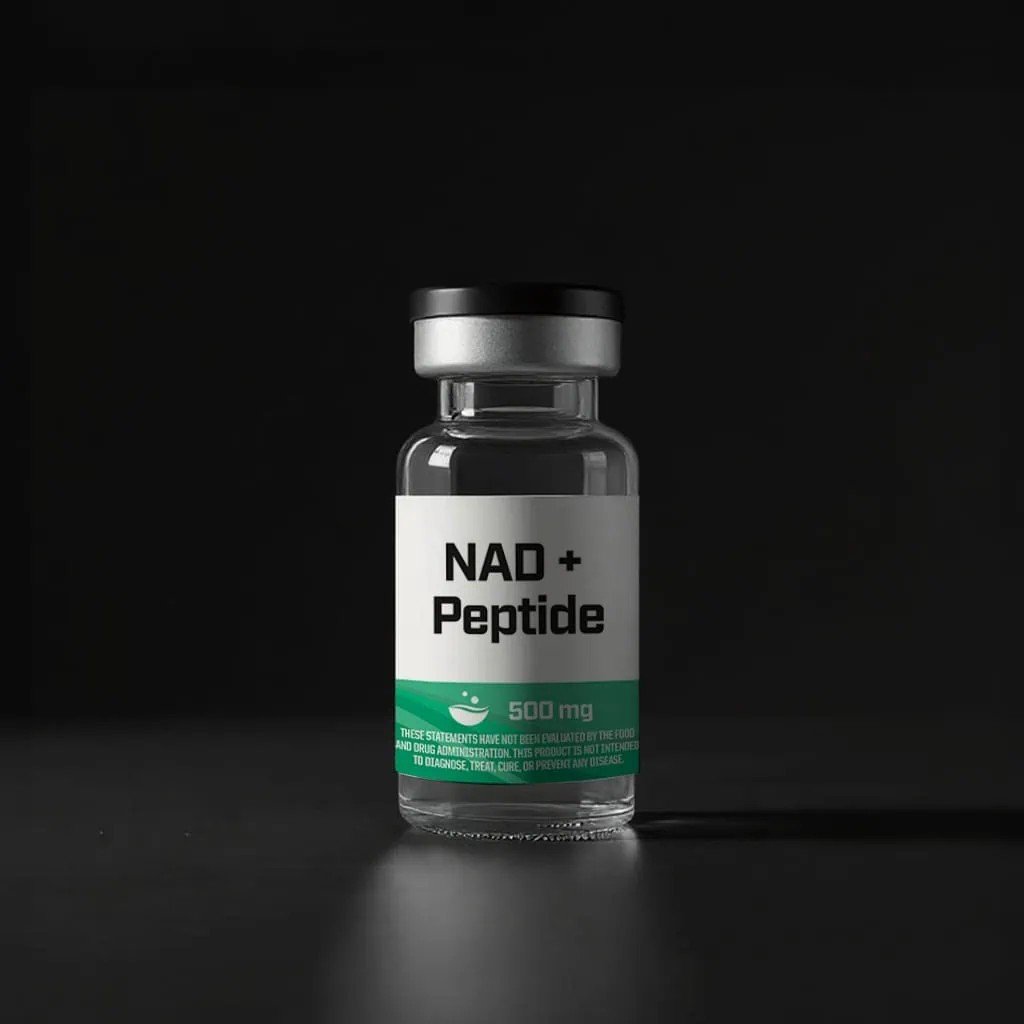
NAD+ Research Peptide
What Is NAD+?
NAD+ Research Peptide refers to nicotinamide adenine dinucleotide in its oxidized form, also called oxidized NAD or β-NAD+. Despite the product name, NAD+ is not a peptide; it is a naturally occurring dinucleotide coenzyme formed from nicotinamide mononucleotide and adenosine monophosphate. Cells use it in energy metabolism, redox balance, DNA-damage responses and intracellular signalling.
NAD+ is available through Soma Chems Lab within the broader research peptide collection.
Research Overview
Researchers study NAD+ because cells use it both as an electron carrier and as a consumable substrate for regulatory enzymes. The NAD+/NADH pair transfers electrons during glycolysis, the citric-acid cycle and mitochondrial oxidative phosphorylation, connecting nutrient breakdown with cellular ATP production. NAD+ is also consumed by sirtuins, poly(ADP-ribose) polymerases and CD38. Its underlying biology is strongly established in cellular and animal research, while direct NAD+ administration has considerably less human evidence. Much clinical research instead examines NAD+ precursors such as nicotinamide riboside and nicotinamide mononucleotide.
Mechanisms and Relevant Pathways
NAD+ does not act through one principal receptor. Sirtuins are NAD+-dependent enzymes that remove acetyl groups from proteins involved in metabolism, stress responses, mitochondrial regulation and gene expression. Because they consume NAD+ during catalysis, their activity can be influenced by the NAD+ available within individual cellular compartments.
Poly(ADP-ribose) polymerases, particularly PARP1, detect DNA-strand damage and use NAD+ to attach ADP-ribose units to proteins that coordinate repair. Sustained PARP activation can therefore reduce cellular NAD+ pools. CD38 is an NADase, meaning it breaks down NAD+ into signalling metabolites involved in calcium regulation and immune-cell communication. These interconnected pathways make NAD+ a research focus in mitochondrial biology, metabolic regulation, inflammation, cellular senescence and tissue-stress models.
Directly supplied NAD+ should not automatically be treated as equivalent to an NAD+ precursor. Extracellular NAD+ can be degraded by surface enzymes before its components enter cells, whereas precursors are processed through salvage pathways that rebuild intracellular NAD+. A small human infusion study found rapid removal or metabolism of circulating NAD+ followed by increases in NAD+ and several metabolites, but it did not establish broad functional outcomes.
Comparison With Related Research Peptides
P21 Research Peptide is a CNTF-derived neurotrophic peptide investigated mainly through LIF–STAT3, BDNF and neuronal-plasticity pathways. NAD+ is broader and non-peptidic, functioning as a metabolic coenzyme rather than a targeted neurotrophic signal.
FOXO4-DRI Proxofim Research Peptide is a synthetic retro-inverso peptide designed to disrupt the FOXO4–p53 interaction in senescent-cell models. NAD+ does not reproduce that proposed senolytic mechanism; its connection to senescence research concerns metabolic state, sirtuin activity, PARP demand and NAD+ consumption.
Current Evidence and Limitations
Human evidence for direct NAD+ remains narrow. A single-centre randomized trial in people with ischemic cardiomyopathy reported a difference in left-ventricular ejection fraction after intravenous NAD+, but several secondary outcomes did not reach statistical significance and independent multicentre replication is required. Other direct-NAD+ studies have concentrated mainly on metabolism, pharmacokinetics or short-term tolerability. Findings involving NR or NMN cannot be assumed to apply directly to intact NAD+.
Frequently Asked Questions
Is NAD+ actually a peptide?
No. NAD+ is a dinucleotide coenzyme rather than an amino-acid peptide.
What is NAD+ mainly researched for?
It is investigated in cellular energy metabolism, mitochondrial redox reactions, DNA repair, sirtuin biology, immune signalling and cellular-ageing models.
Is direct NAD+ supported by extensive human research?
No. Human research exists, but it remains limited compared with the cellular and animal evidence base and the growing human literature on NAD+ precursors.
For laboratory research use only.
Additional information
NAD+
$959.77
NAD+ research peptide developed for laboratory and analytical research applications.
• High purity peptide compound
• Third-party lab tested
• Certificate of Analysis available
• Research use only
Reviews
Clear filtersThere are no reviews yet.