
Description
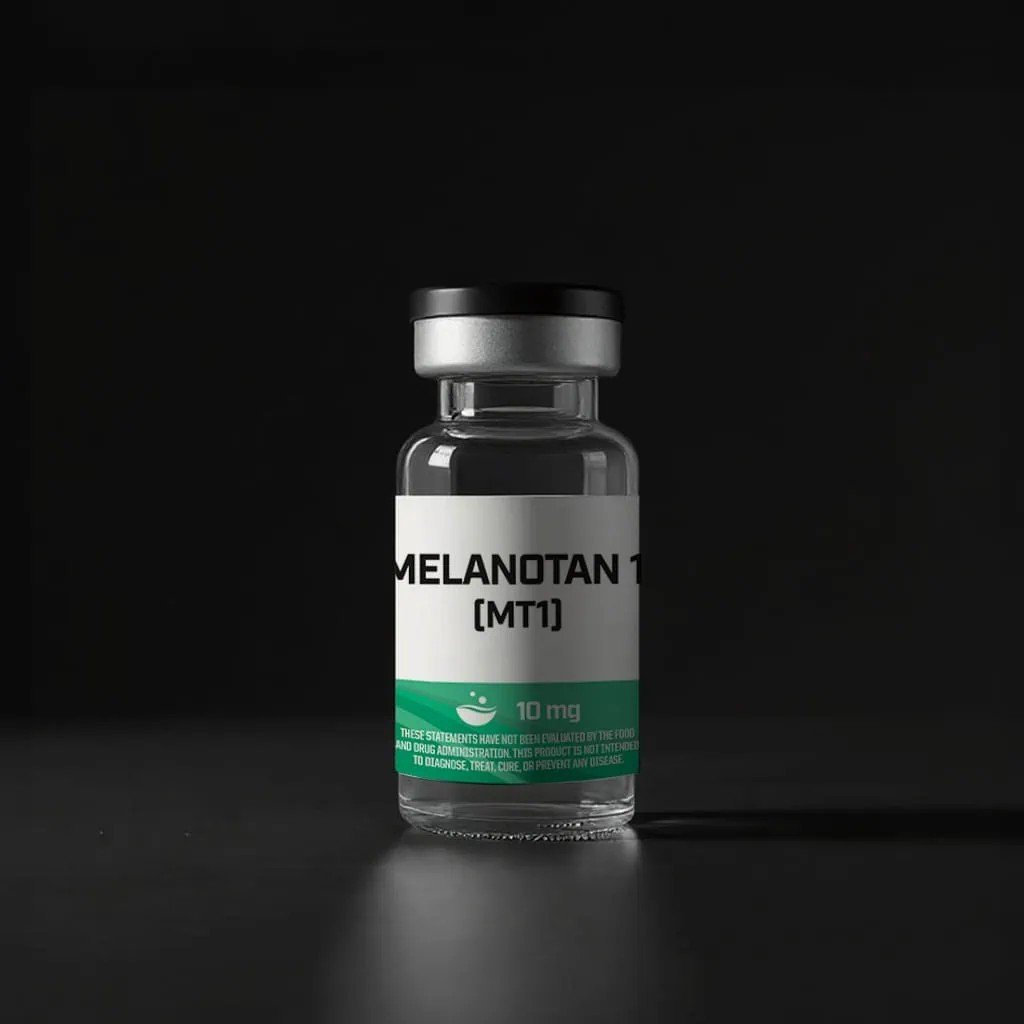
MELANOTAN 1 (MT1) Research Peptide
What Is Melanotan 1?
Melanotan 1 Research Peptide, also called MT1, afamelanotide, NDP-α-MSH or [Nle4,D-Phe7]-α-MSH, is a synthetic linear tridecapeptide analogue of alpha-melanocyte-stimulating hormone. It preserves the 13-residue α-MSH framework while replacing methionine at position 4 with norleucine and L-phenylalanine at position 7 with D-phenylalanine. These substitutions increase resistance to enzymatic breakdown and extend melanocortin activity. MT1 is primarily investigated in melanocortin-1 receptor signalling, pigmentation biology and experimental photoprotection.
MT1 is available through Soma Chems Lab within the wider research peptide collection.
Research Overview
Researchers most commonly study Melanotan 1 for its interaction with the melanocortin-1 receptor, or MC1R, a cell-surface receptor found mainly on melanocytes, the cells that produce skin pigment. MC1R activation promotes eumelanin synthesis, the darker melanin form associated with absorption and scattering of ultraviolet radiation in experimental systems. Evidence spans cellular, animal and human studies, but the strongest human findings concern regulated afamelanotide formulations tested in defined photoprotection settings.
MC1R and Melanogenesis Signalling
Melanotan 1 acts as a melanocortin receptor agonist, meaning it activates receptors normally stimulated by α-MSH. Its principal target is MC1R, although absolute receptor selectivity should not be assumed. MC1R is a G-protein-coupled receptor that activates adenylyl cyclase and raises cyclic AMP, or cAMP, inside melanocytes. cAMP activates protein kinase A and transcription factors that increase microphthalmia-associated transcription factor, or MITF.
MITF controls genes needed for pigment production, including tyrosinase, an enzyme that begins key reactions converting tyrosine into melanin intermediates. This signalling favours eumelanin over the lighter, sulfur-containing pigment pheomelanin. Cellular studies also associate MC1R signalling with antioxidant responses and DNA-repair activity after ultraviolet exposure, but these observations do not establish complete protection against ultraviolet injury.
Cellular, Animal and Human Evidence
Cell and animal models support the MC1R–cAMP–MITF mechanism and show increased melanogenic activity following exposure to α-MSH analogues. Early human studies reported increased melanin and pigmentation, including among participants carrying certain MC1R variants. Later randomized trials evaluated afamelanotide in erythropoietic protoporphyria, a disorder involving painful light sensitivity, and reported increased pain-free light exposure. Those findings apply to a controlled pharmaceutical implant and a specific clinical population; they cannot automatically be transferred to unformulated MT1 research material or unrelated experimental uses.
Comparison With Related Peptides
LL-37 Research Peptide is a 37-residue human cathelicidin investigated in microbial membrane disruption, biofilm biology and innate immune signalling. It does not share MT1’s α-MSH-derived structure or MC1R-centred melanogenesis pathway.
ARA-290 Research Peptide is an erythropoietin-derived peptide investigated through the proposed innate repair receptor formed by EPOR and the β-common receptor. Its research focuses on inflammatory and tissue-stress signalling rather than pigment synthesis.
Current Evidence and Limitations
Melanotan 1 should not be confused with Melanotan 2, a shorter cyclic analogue with broader activity across melanocortin receptors. Experimental responses may vary with MC1R genotype, baseline pigmentation, ultraviolet exposure, formulation and study design. Human evidence is strongest for specific afamelanotide products and indications, while long-term conclusions for independently supplied MT1 research materials remain limited.
Frequently Asked Questions
Are Melanotan 1 and afamelanotide the same compound?
In scientific literature, Melanotan 1 generally refers to afamelanotide or [Nle4,D-Phe7]-α-MSH when the peptide sequence and chemical form match.
What is the main target of MT1 research?
Its principal target is MC1R, which activates cAMP-dependent signalling and melanogenic gene expression in melanocytes.
Is MT1 the same as Melanotan 2?
No. MT1 is a linear 13-residue α-MSH analogue, whereas Melanotan 2 is a shorter cyclic analogue with a broader receptor profile.
For laboratory research use only.
Additional information
MELANOTAN 1 (MT1) Research Peptide
$39.99
Synthetic α-MSH analogue studied for MC1R signalling, melanogenesis and pigmentation research.
Reviews
Clear filtersThere are no reviews yet.