
Description
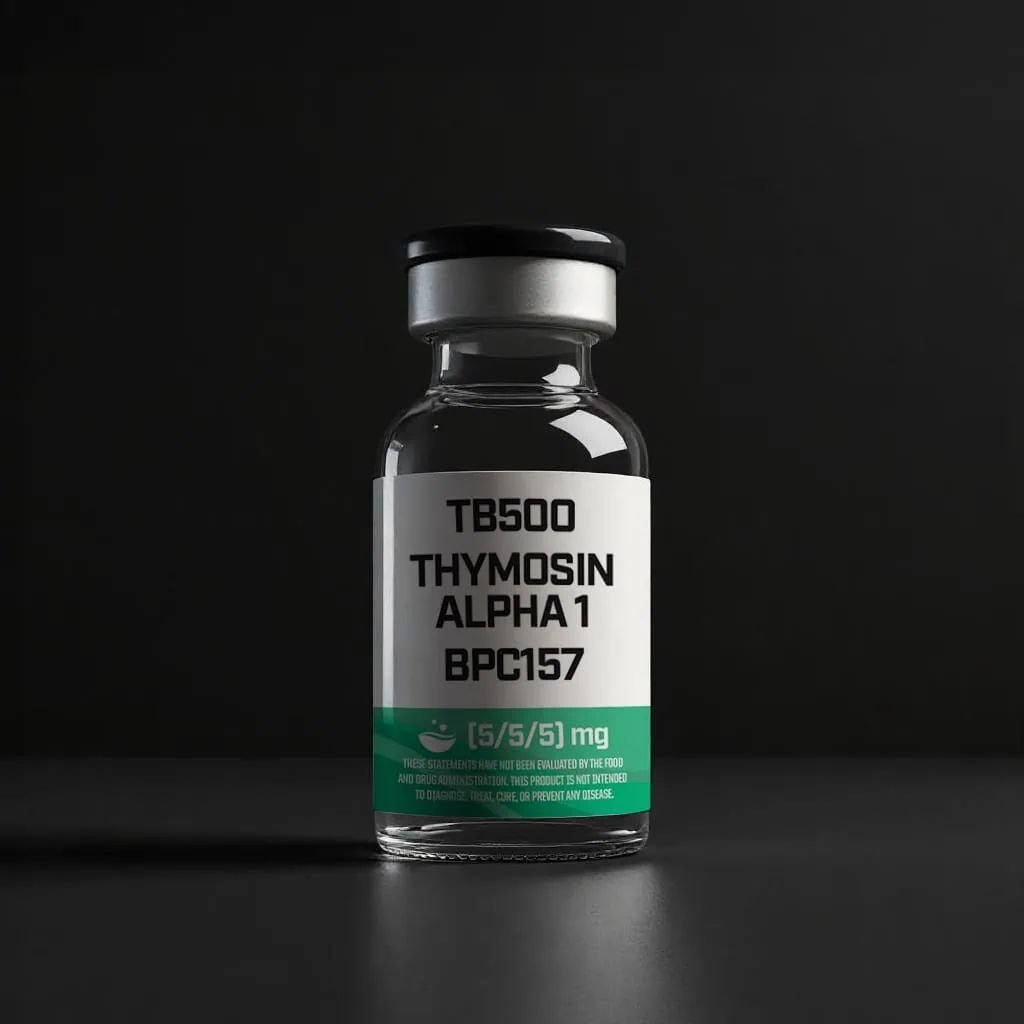
TB500 + THYMOSIN ALPHA 1 + BPC157 Research Peptide
What Is This Peptide Blend?
TB500 + THYMOSIN ALPHA 1 + BPC157 Research Peptide is a multi-component research formulation containing three structurally and mechanistically distinct peptides. TB-500 is identified as Ac-LKKTETQ, an N-terminally acetylated seven-amino-acid fragment corresponding to residues 17–23 of thymosin beta-4. Thymosin alpha-1, also called thymalfasin, is an N-terminally acetylated 28-amino-acid immunoregulatory peptide derived from prothymosin alpha. BPC-157 is a synthetic 15-amino-acid peptide with the sequence GEPPPGKPADDAGLV, investigated predominantly in experimental vascular and tissue-response models.
This blend can be studied through Soma Chems Lab alongside other compounds in the broader research peptide collection.
Distinct Biological Pathways
TB-500 research centres on the actin-binding region of thymosin beta-4. Actin alternates between soluble globular actin and polymerized filaments that control cellular shape, adhesion and migration. The LKKTETQ region contributes to thymosin beta-4 interactions with actin, although the short acetylated fragment should not be assumed to reproduce every function of the complete 43-amino-acid protein.
Thymosin alpha-1 is investigated mainly through dendritic-cell and lymphocyte signalling. Animal and cellular studies associate it with Toll-like-receptor-dependent pathways, including TLR9–MyD88–IRF7 signalling and p38 MAPK–NF-κB activation. MyD88 transmits signals from Toll-like receptors, IRF7 regulates type I interferon transcription, and NF-κB controls numerous cytokine and immune-response genes. These studies support immunoregulatory activity without establishing one exclusive high-affinity receptor.
BPC-157 has been studied primarily in cells and animals for effects involving endothelial signalling, nitric oxide and angiogenesis. Experimental work reported increased VEGFR2 internalization and activation of the VEGFR2–Akt–eNOS pathway. VEGFR2 normally regulates endothelial growth and migration, while endothelial nitric oxide synthase produces nitric oxide involved in vascular tone and cellular signalling. Separate isolated-vessel experiments implicated a Src–caveolin-1–eNOS pathway, but a direct BPC-157 receptor has not been confirmed.
Evidence for the Combined Formulation
No peer-reviewed cellular, animal or human study was identified that evaluated TB-500, thymosin alpha-1 and BPC-157 together as one defined formulation. Proposed interactions between their cytoskeletal, immune and vascular pathways therefore remain untested hypotheses rather than demonstrated synergy.
Evidence also differs substantially between the components. Thymosin alpha-1 has been examined in multiple human clinical settings, although outcomes vary by disease and trial design. BPC-157 evidence remains predominantly preclinical, with an early pharmacokinetic study registered and newer efficacy research still emerging. Research specifically evaluating acetylated TB-500 in humans remains extremely limited.
Comparison With Related Peptides
The individual TB-500 Research Peptide isolates the Ac-LKKTETQ component for research focused on thymosin beta-4 fragment biology. The three-component blend additionally introduces thymosin alpha-1-associated immune pathways and BPC-157-associated endothelial signalling, but their inclusion does not establish enhanced or coordinated activity.
Tesamorelin Research Peptide is a growth hormone-releasing hormone analogue that activates pituitary GHRH receptors, increasing pulsatile growth-hormone release and downstream IGF-1 signalling. Tesamorelin therefore has a defined endocrine mechanism and randomized human trial evidence that are fundamentally different from the blend’s largely independent cytoskeletal, immune and vascular research pathways.
Current Evidence and Limitations
The blend lacks combination-specific pharmacology, interaction testing, pharmacokinetic characterization and controlled human trials. Findings from full-length thymosin beta-4 cannot automatically be transferred to TB-500, while cellular and animal BPC-157 findings cannot be presented as established human outcomes. Differences in experimental models and evidence quality prevent conclusions about combined efficacy or safety.
Frequently Asked Questions
Is this formulation one peptide?
No. It combines three separate peptides with different structures and research pathways.
Is TB-500 the same as thymosin alpha-1?
No. TB-500 is an acetylated thymosin beta-4 fragment, whereas thymosin alpha-1 is a distinct 28-amino-acid immunoregulatory peptide.
Has this exact three-peptide blend been clinically studied?
No controlled human trial evaluating the complete combination was identified.
Additional information
TB500 + THYMOSIN ALPHA 1 + BPC157 Research Peptide
$109.99
Multi-peptide blend researched for immune, vascular and cytoskeletal pathways.
Reviews
Clear filtersThere are no reviews yet.