

Description
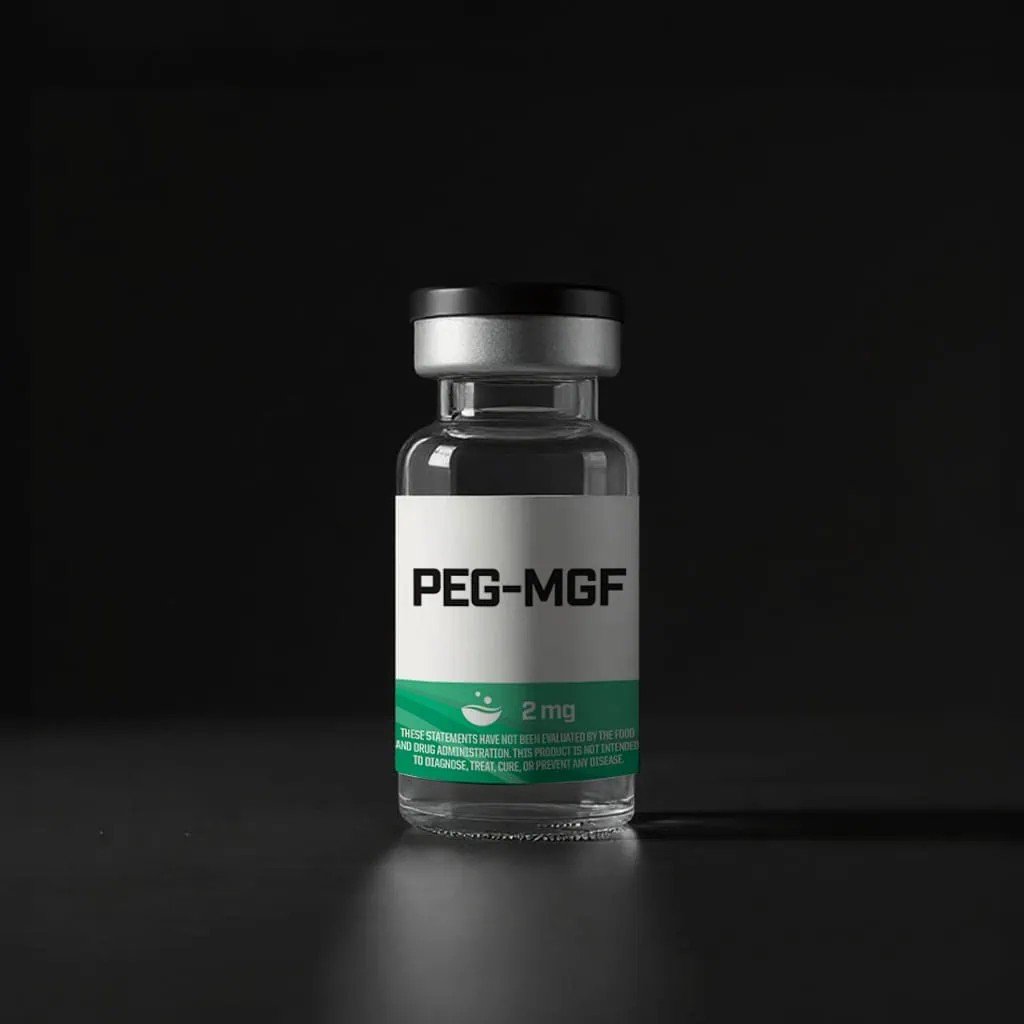
PEG-MGF Research Peptide
What Is PEG-MGF?
PEG-MGF Research Peptide is a research designation for a polyethylene glycol-conjugated peptide derived from the C-terminal E-domain of human IGF-1Ec, historically called mechano growth factor or MGF. Alternative names include PEGylated MGF and PEGylated mechano growth factor E peptide. Human IGF-1Ec is produced through alternative splicing of the IGF1 gene and contains a unique 24-amino-acid Ec region distinct from mature 70-amino-acid IGF-1.
PEG-MGF is not one universally standardized chemical entity. The name alone does not specify the PEG chain size, conjugation site, linker chemistry or additional amino-acid modifications. Patented variants include N-terminal PEGylation combined with D-arginine substitutions intended to improve resistance to degradation; the combined modified peptide remained detectable longer than an unmodified comparator in human-plasma experiments.
PEG-MGF can be examined through Soma Chems Lab alongside other compounds in the research peptide collection.
IGF-1 Splicing and Signalling Pathways
Synthetic MGF E-domain peptides have been studied separately from mature IGF-1. Mature IGF-1 activates the IGF-1 receptor, a receptor tyrosine kinase that stimulates PI3K–Akt signalling associated with cellular survival and metabolism, together with Ras–ERK signalling involved in proliferation and differentiation.
The receptor biology of the isolated MGF E peptide remains unresolved. Bone-marrow stem-cell experiments found that blocking IGF-1R reduced MGF E peptide-induced migration and ERK1/2 activation. Other studies reported proliferation, cellular uptake or ERK activation without detectable IGF-1R phosphorylation or after receptor inhibition. These conflicting findings indicate that no dedicated PEG-MGF receptor has been validated and that responses may depend on cell type, peptide construction and experimental conditions.
Cellular and Animal Evidence
In cultured human muscle progenitor cells, the non-PEGylated 24-residue MGF E peptide increased proliferative lifespan and delayed senescence in neonatal and young-adult cultures, while older-adult cells responded less consistently. Separate experiments associated the peptide with changes in proliferation, migration and differentiation in mesenchymal stem cells, osteoblasts, tenocytes and cardiac-derived cells.
In mice, synthetic MGF E peptide promoted the engraftment of transplanted human muscle progenitor cells. Other rodent studies investigated cardiac and neural injury models, but many used non-PEGylated peptides or specially modified sequences rather than one standardized PEG-MGF molecule. These findings therefore cannot establish the pharmacology of every PEGylated preparation.
Comparison With Related Peptides
Pinealon Research Peptide is the Glu-Asp-Arg tripeptide investigated in neuronal oxidative-stress, ERK1/2 and gene-interaction models. Pinealon is not derived from IGF-1 and does not share PEG-MGF’s E-domain structure or muscle-cell research context.
IGF LR3 Research Peptide is an engineered IGF-1 analogue with greatly reduced affinity for IGF-binding proteins and a clearer IGF-1R-mediated mechanism. PEG-MGF instead represents a modified E-domain peptide whose receptor dependence remains disputed.
Current Evidence and Limitations
The evidence located for PEG-MGF is predominantly cellular, animal and patent-based. Controlled human studies specific to a fully characterized PEG-MGF conjugate were not identified, and findings from native MGF, full-length IGF-1Ec or non-PEGylated E peptides cannot confirm the activity of an unspecified PEGylated formulation.
Frequently Asked Questions
Is PEG-MGF the same as IGF-1?
No. PEG-MGF is based on the distinctive E-domain of an IGF-1 splice variant, whereas mature IGF-1 is the receptor-binding 70-amino-acid growth factor.
Does PEG-MGF directly activate IGF-1R?
The evidence is inconsistent, and no definitive receptor mechanism has been established.
Why is MGF PEGylated?
PEGylation is investigated as a stabilization strategy, but its effect depends on the exact conjugation chemistry and accompanying modifications.
Additional information
PEG-MGF
$49.99
PEGylated MGF peptide for muscle-cell and growth-factor research.
Reviews
Clear filtersThere are no reviews yet.